Brand platform
A brand platform is the document a brand stands on. It records who the brand is for, what it promises, why people believe it and how it is positioned in the market. The identity, website and packaging come later and are checked against it, the way a building is checked against its drawings.
Brand platform, identity and brand book
Brand platform
Answers who you are and why you exist.
Identity
Answers how you look: logo, color, type, graphics, motion.
Visual guideline and brand book
The rulebook for using all of that. Together with the platform it makes a full brand book.
When there is no platform, the identity rests on taste, and every layout review turns into “I like it” versus “I don't”.
How a brand platform is developed
Work on a brand platform takes from two weeks. It starts with a conversation with the founder, who often already sees the brand, though more as a feeling than in words. We then study the market, competitors and audience and test that feeling against what we find. From there we write the platform section by section, discuss it with the client and finalize it. The result is a presentation like the Dresses example below.
What's inside: the Dresses example
Dresses is a womenswear brand that brings more color into everyday life. Dresses is a working name: we came up with the real name after the platform, and from it. Below are the sections of the platform with the matching slides from the example case.
- 01
Brand assets
The strengths the product already has that set it apart from competitors.
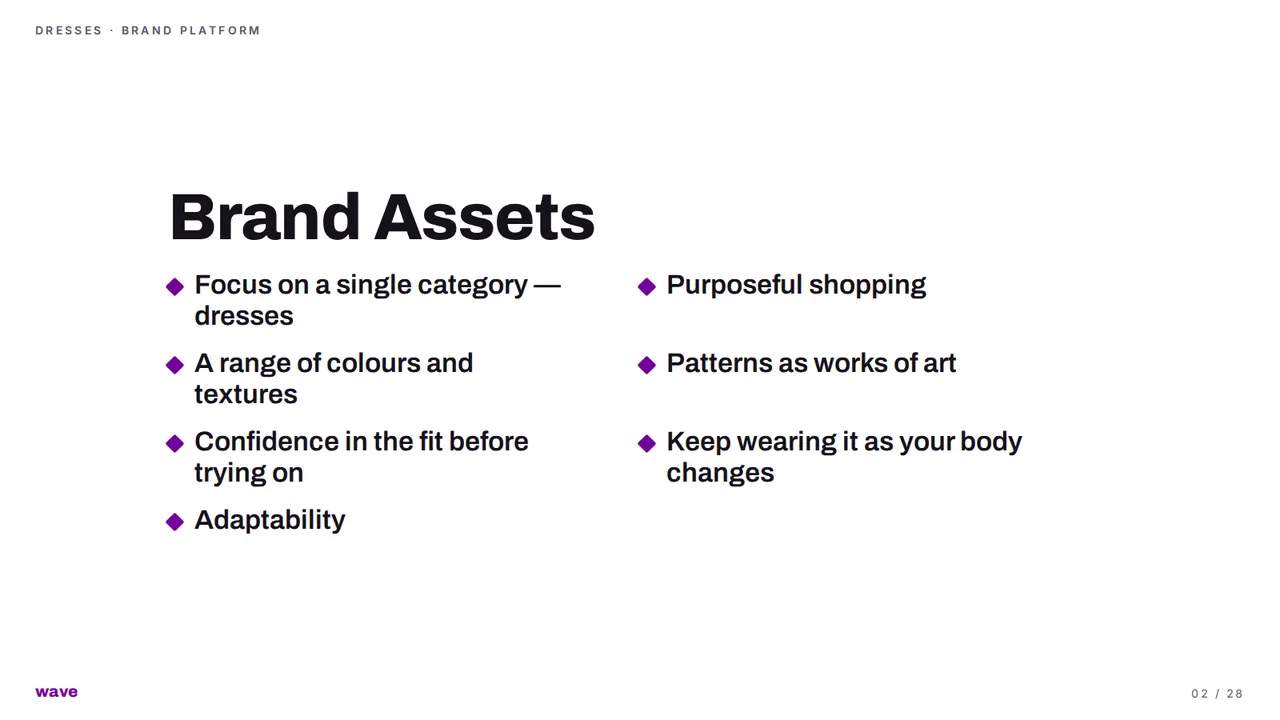
Dresses is a clothing brand with a single category: dresses. The focus is on prints and on a fit that suits any figure and, thanks to a special cut, adapts as the figure changes.
- 02
Competitors and market map
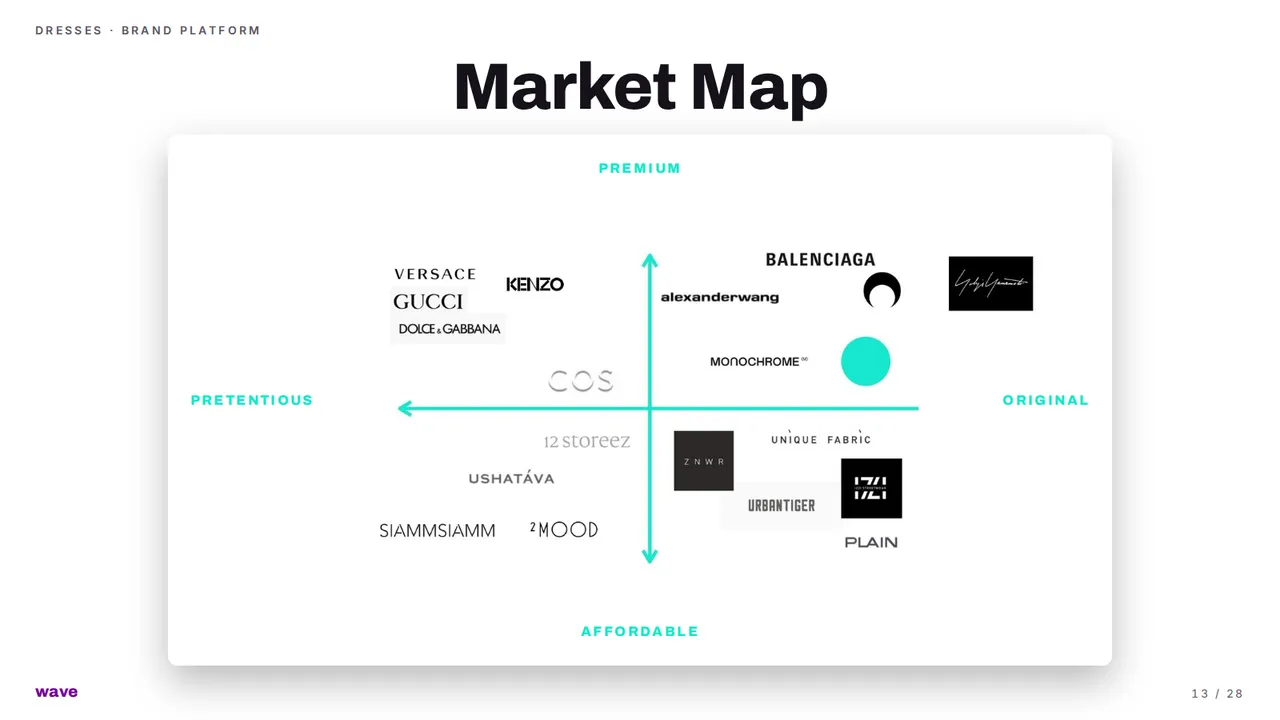
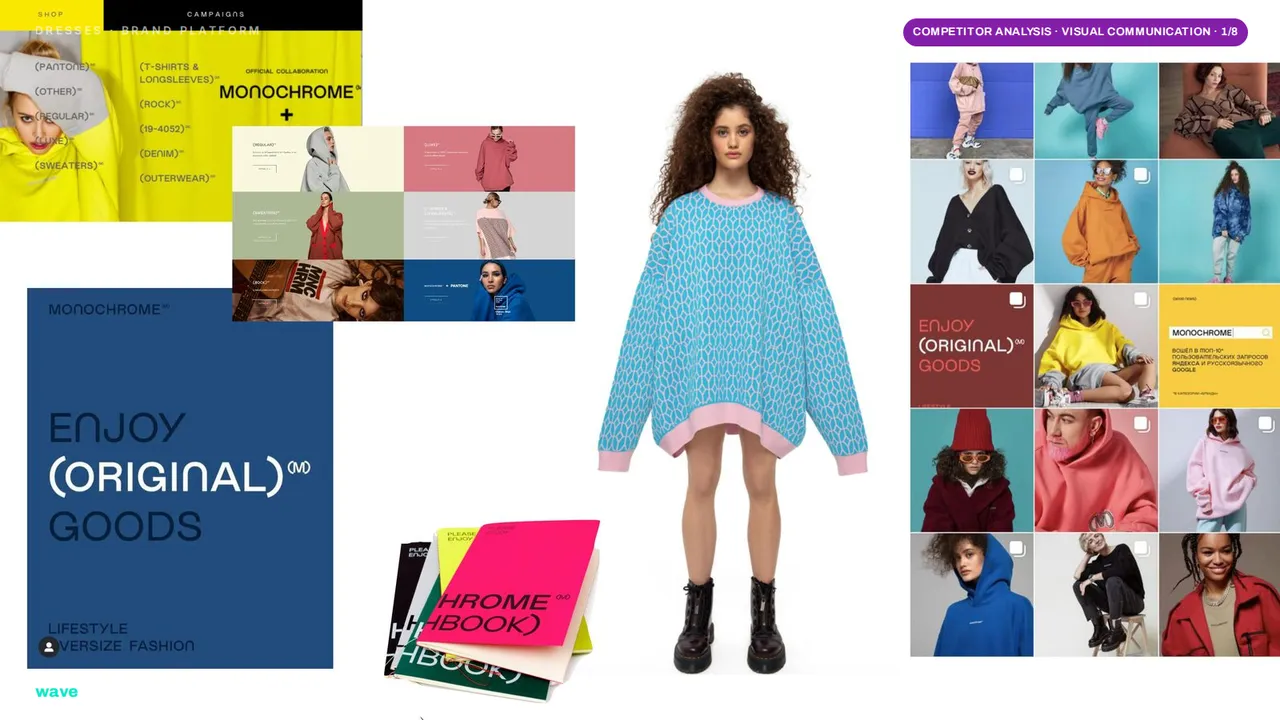
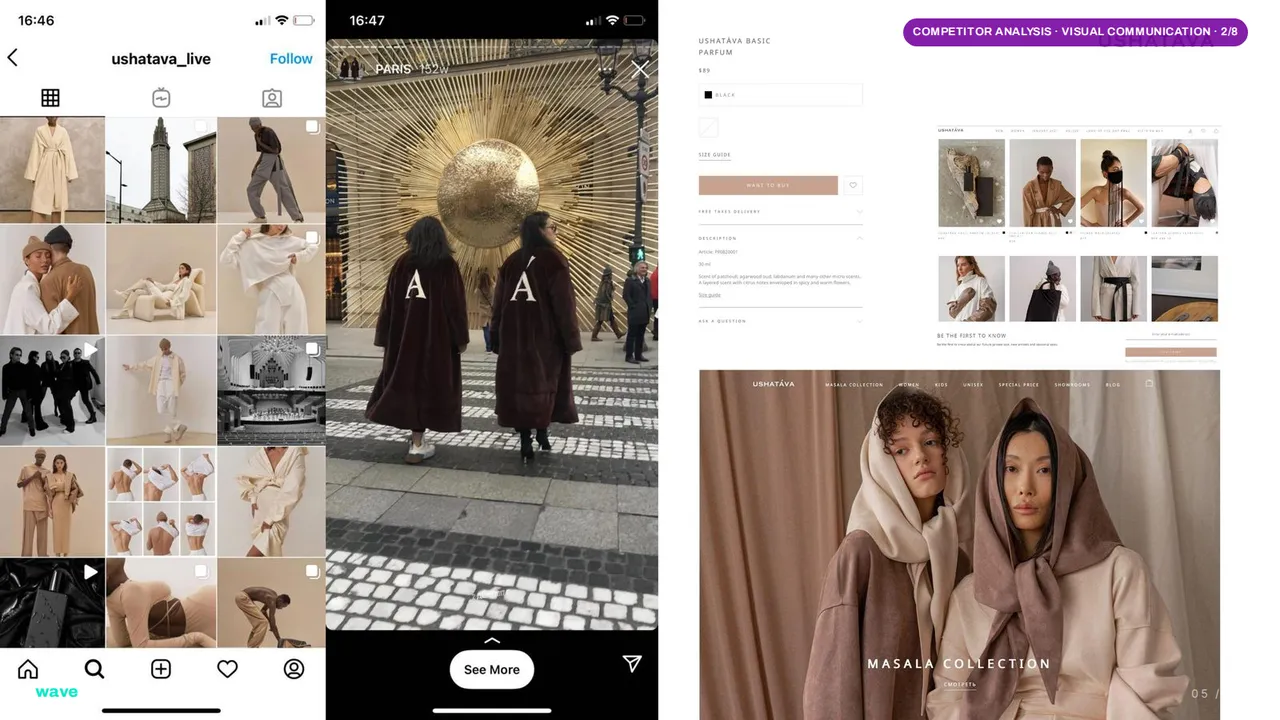
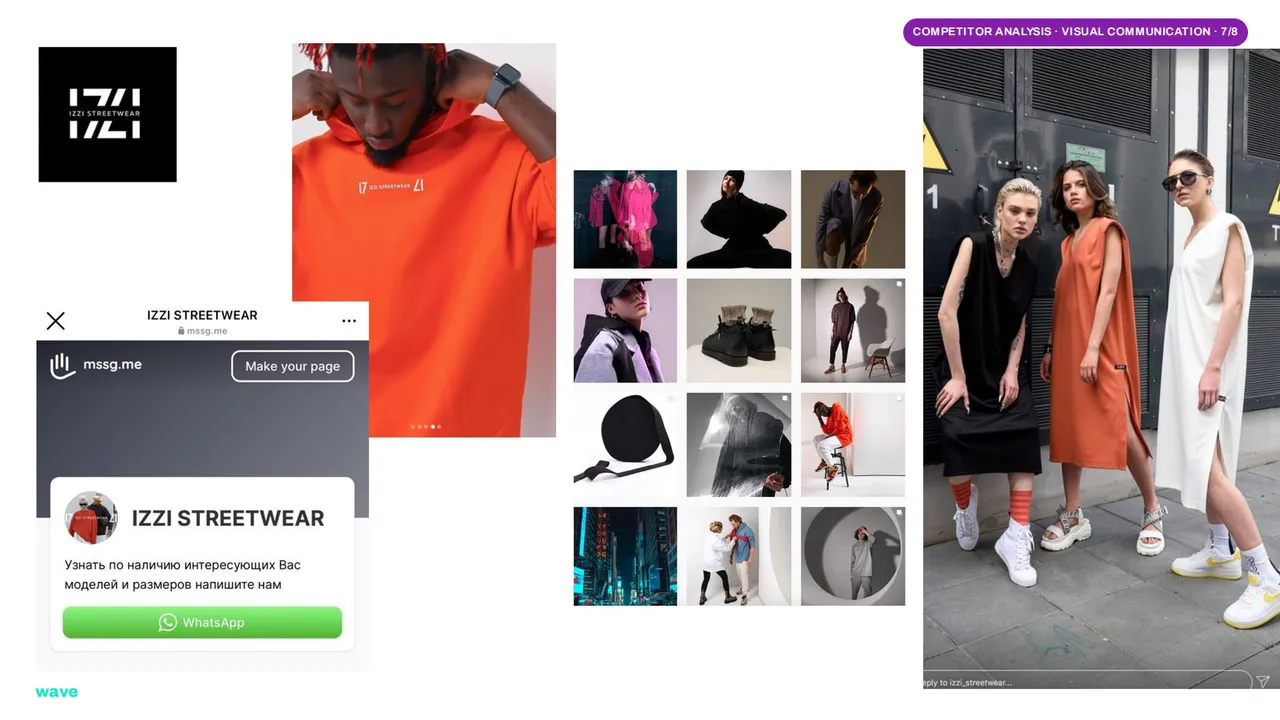
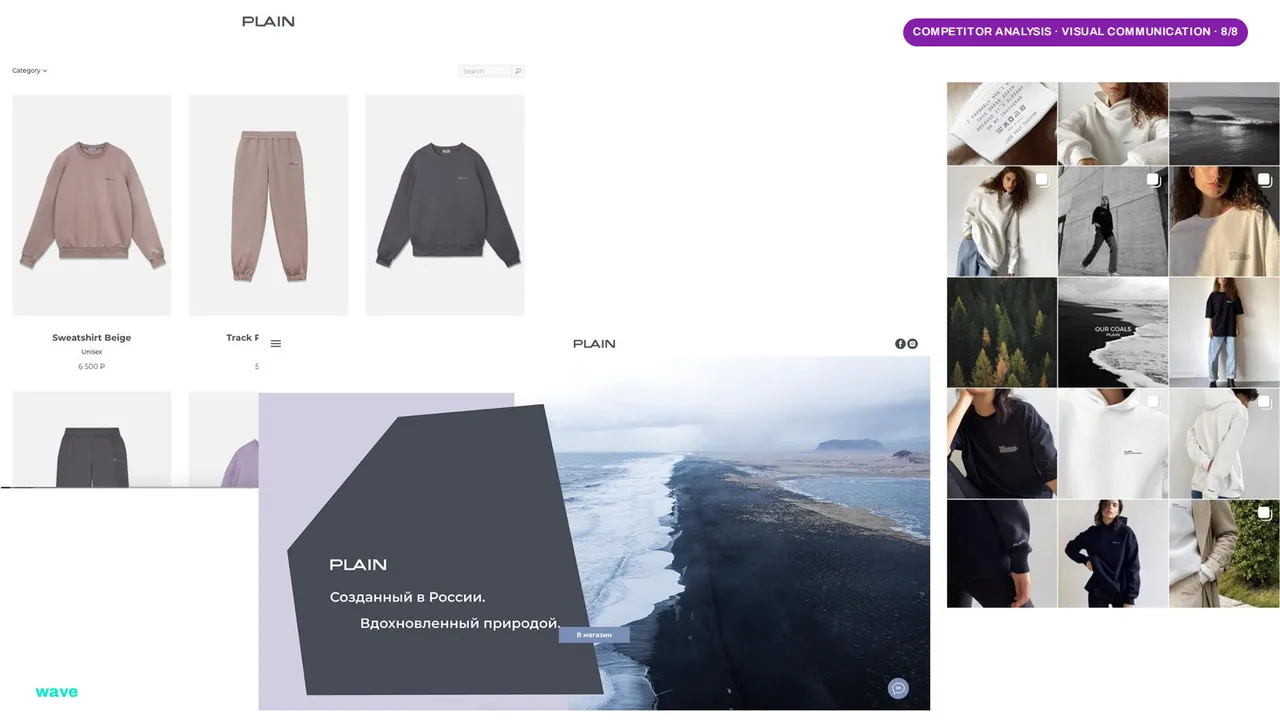
We look at how similar brands look and talk to buyers, and build a market map from that analysis: brands are placed along two axes that matter to the buyer, and we find our brand's place on the map. For a brand already on the market, that means two points: where it is now and where it wants to get to.
For the market of brands competing with Dresses, we chose the axes premium to affordable and pretentious to original. The brand takes the original premium spot, which means communication without pretension.
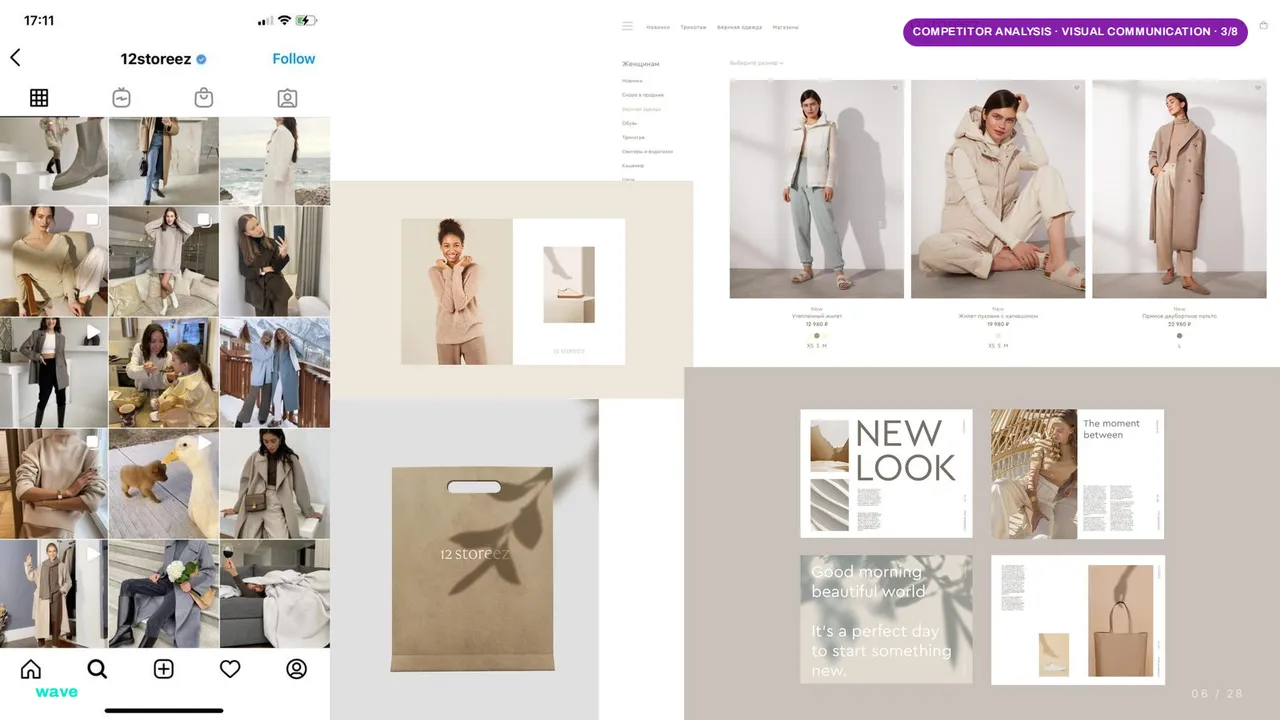
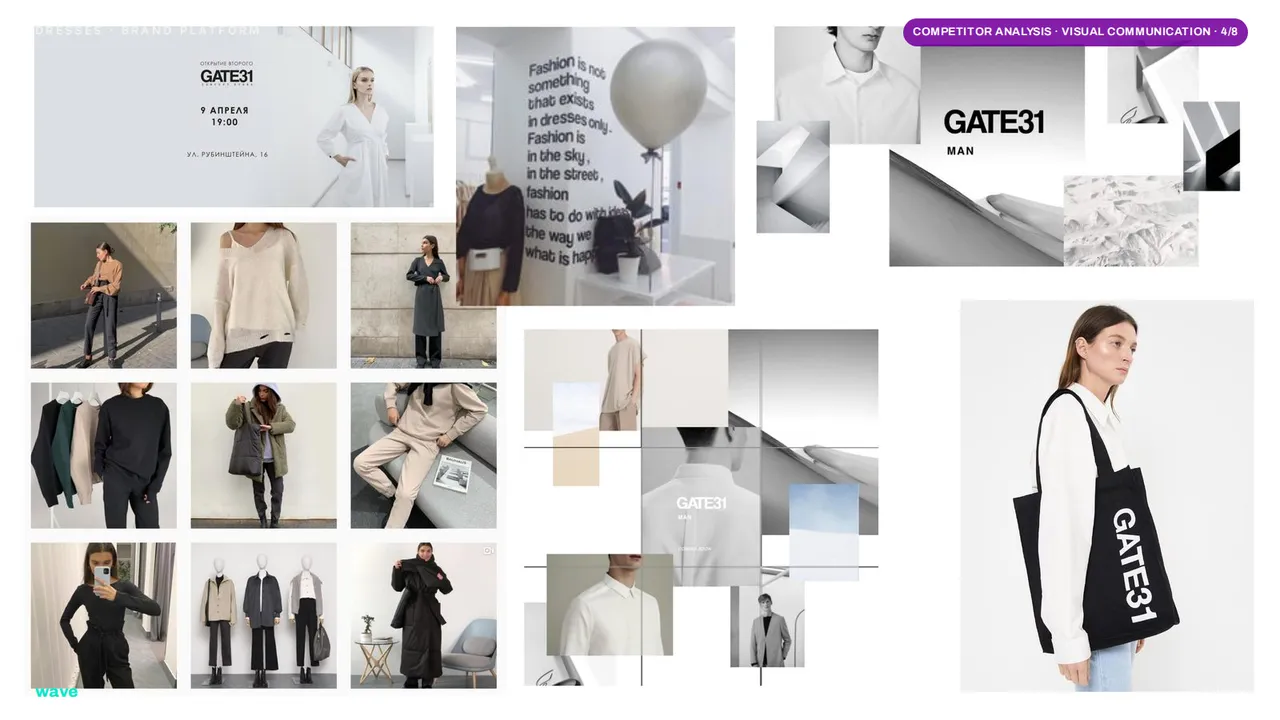
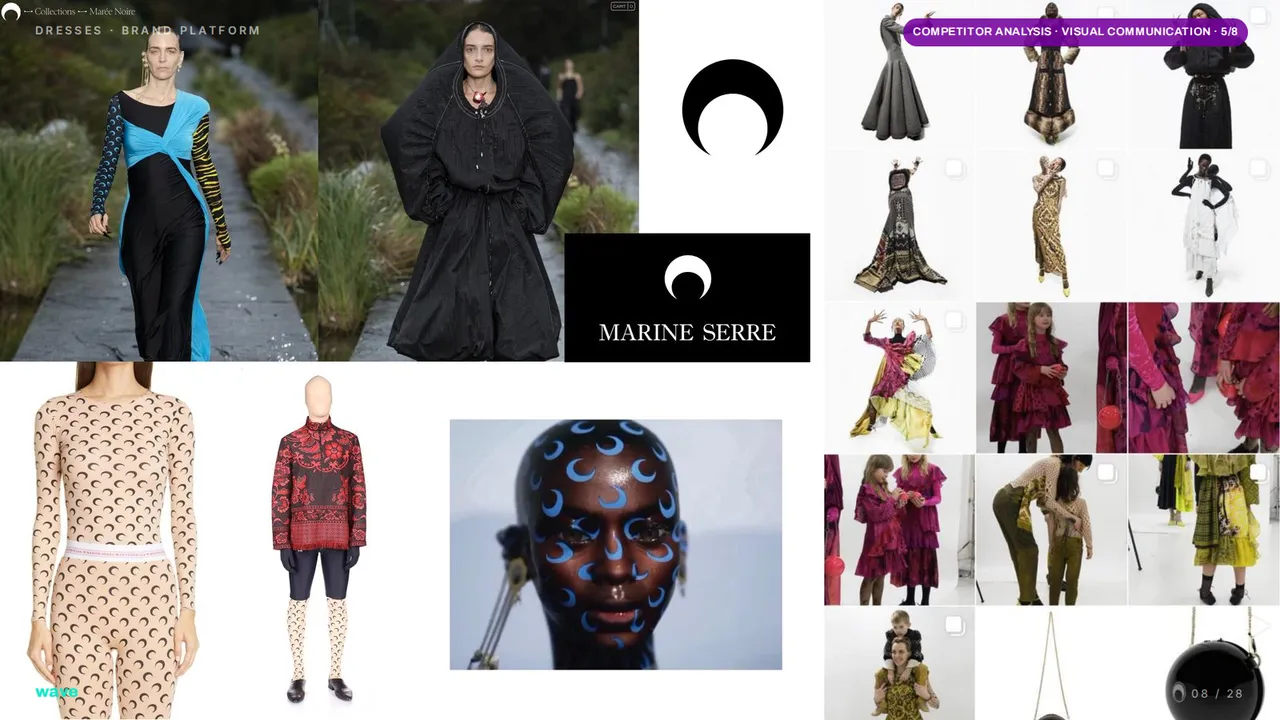
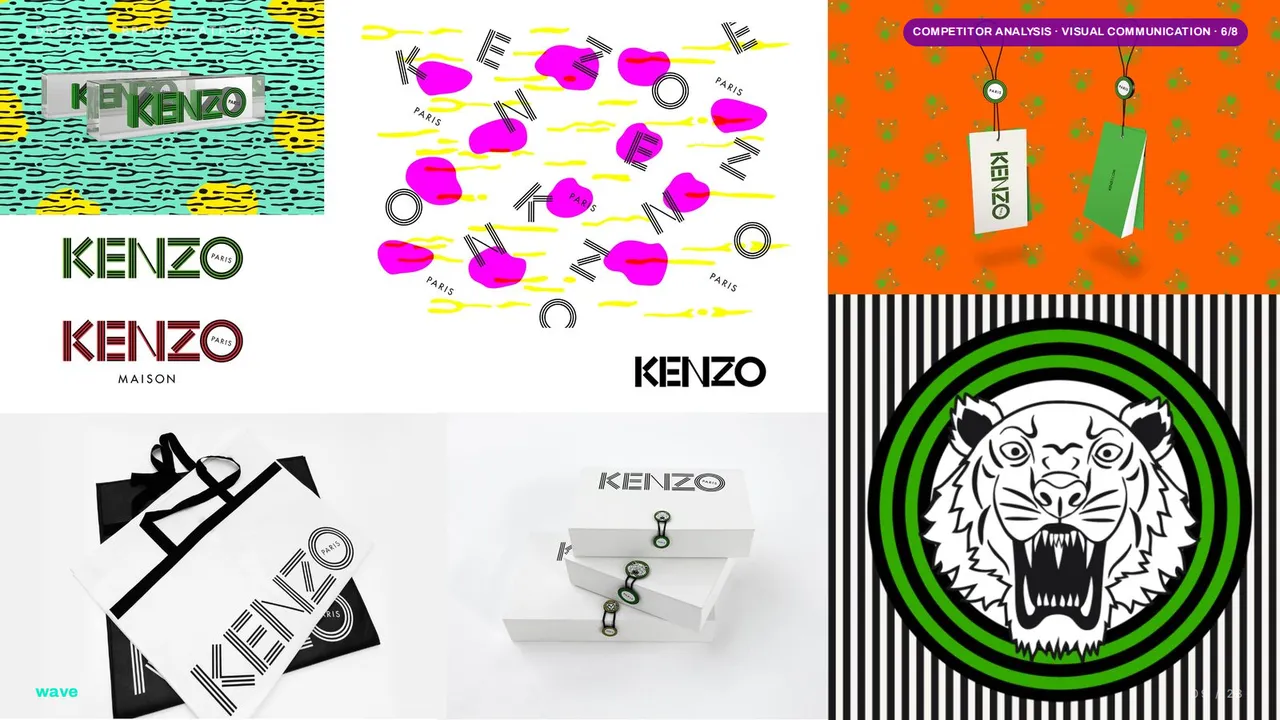
9 slides · swipe →
- 03
Target audience
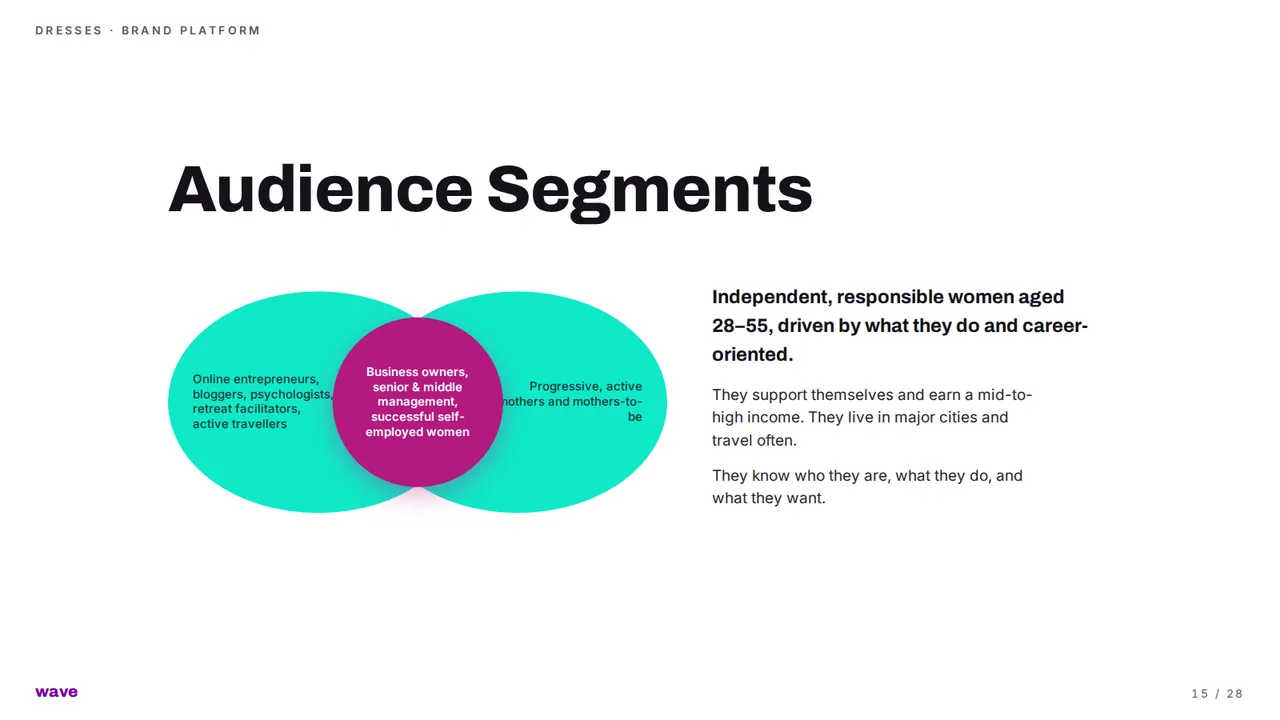
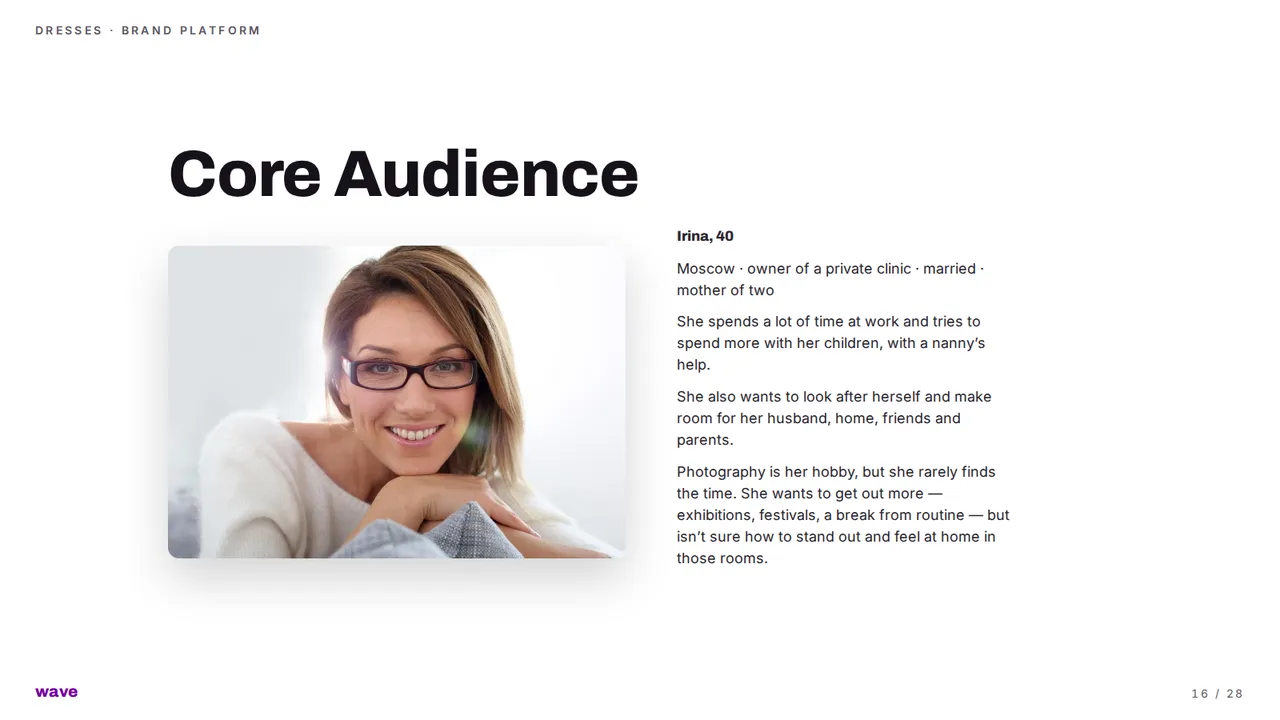
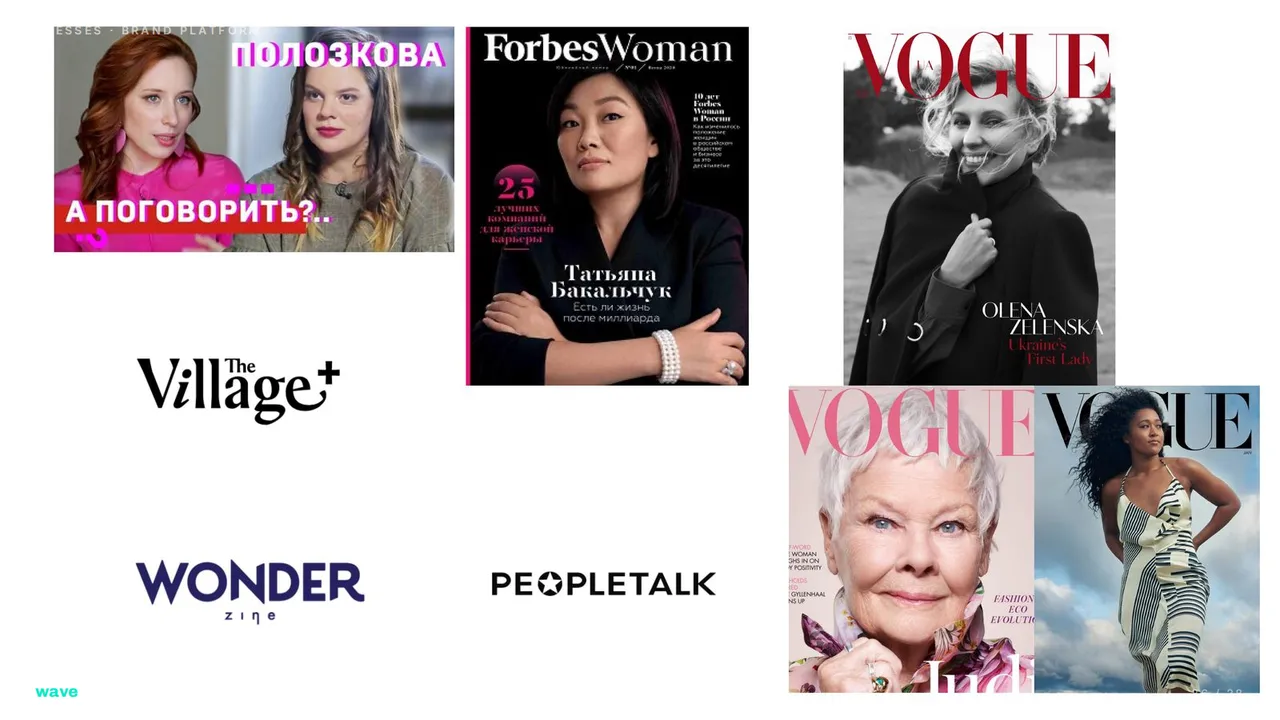
Segments and the core audience. We write the core audience as a persona, a portrait of the ideal buyer with a name and an age, and study the visual world these people live in.
For Dresses, these are independent women aged 28–55 who support themselves and travel a lot. The persona is Irina, 40: she owns a private clinic, has two children, wants to get out to exhibitions and festivals more often and isn't quite sure how to stand out there. Secondary audience groups: progressive young mothers and mature digital nomads.
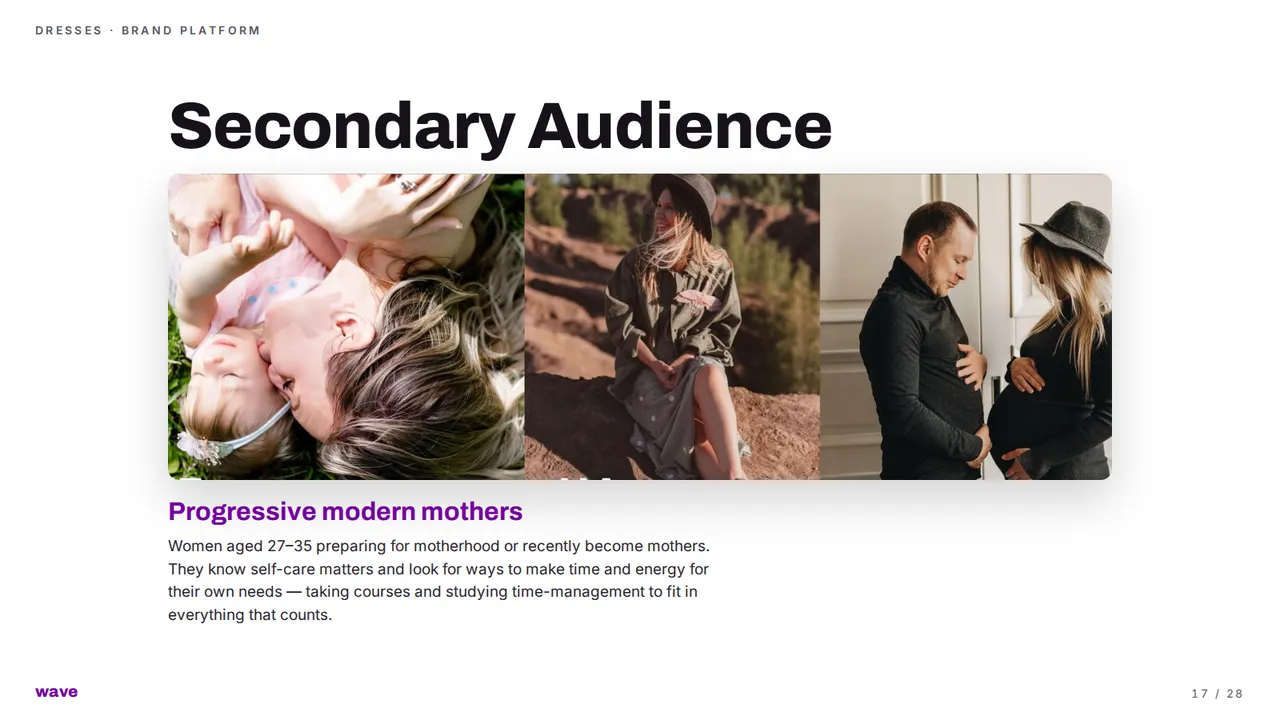
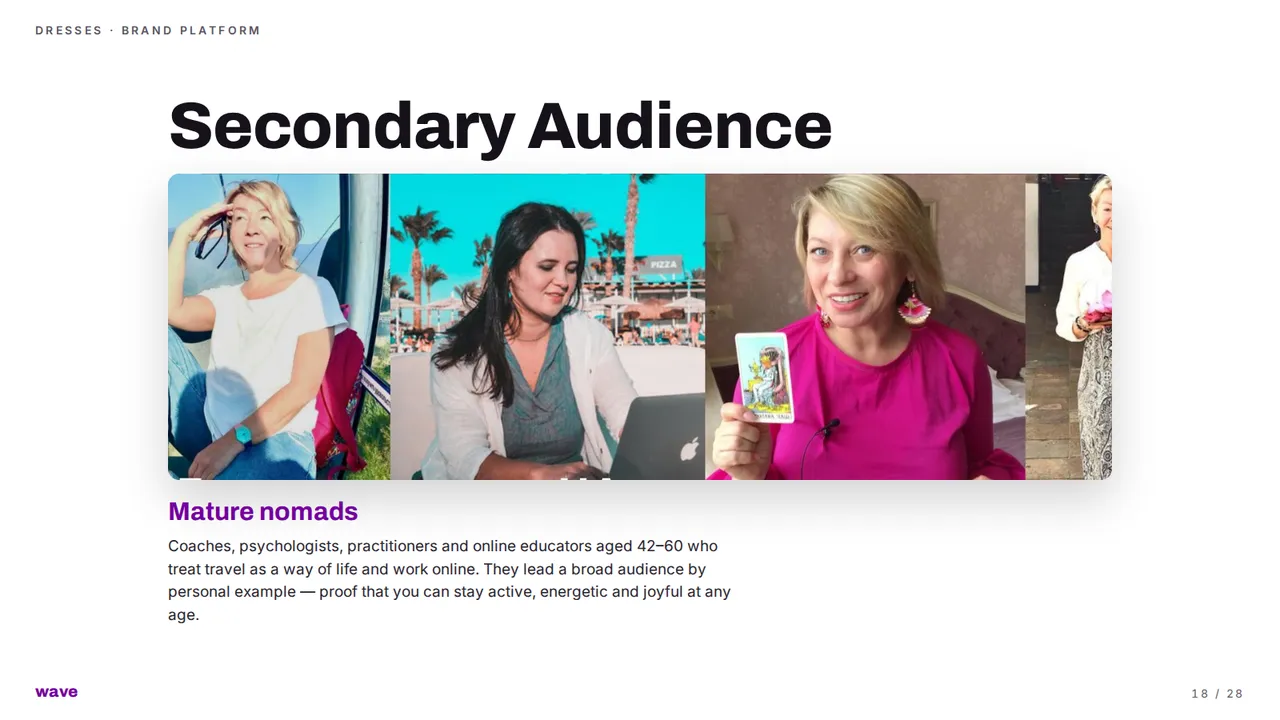

5 slides · swipe →
- 04
Audience insight
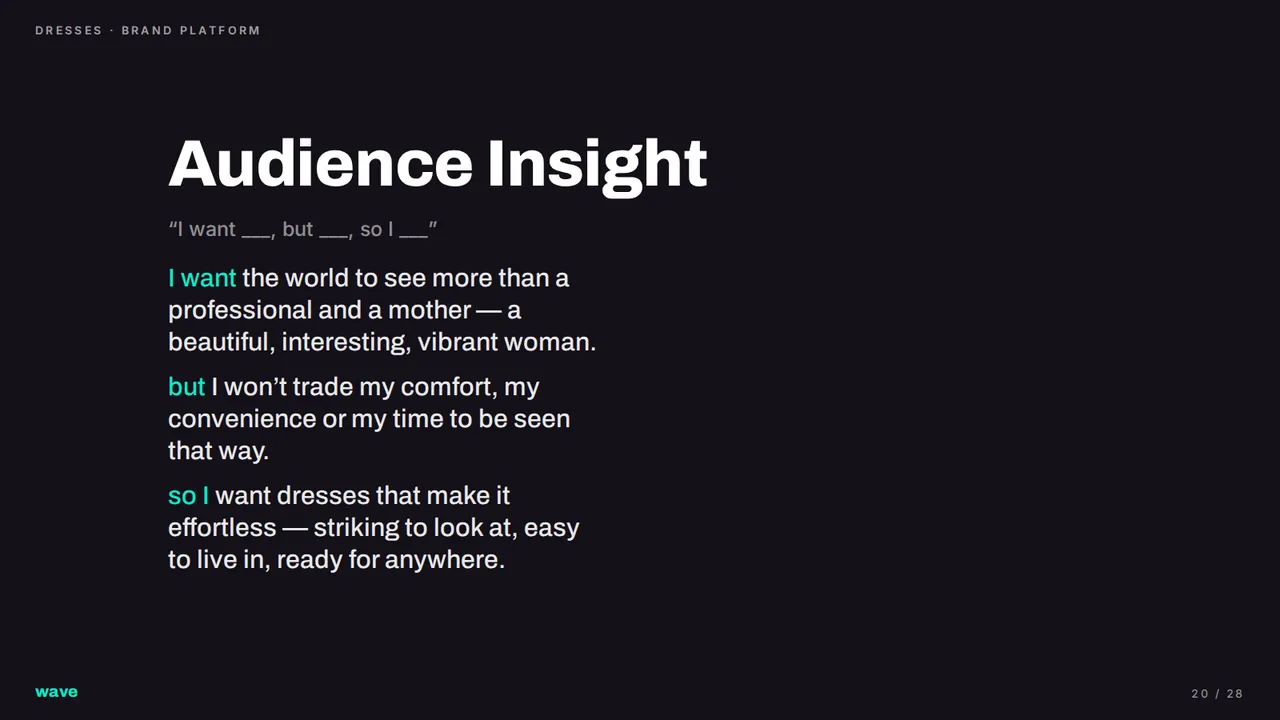
The contradiction the brand resolves, in one sentence built on the formula: I want…, but…, so I…
Dresses: I want people to see a beautiful, vibrant woman in me as well as a professional and a mother, but I won't pay for it with comfort or time, so I need dresses that do it for me.
- 05
Brand message and reasons to believe
What the brand promises, and the facts it backs that promise with.
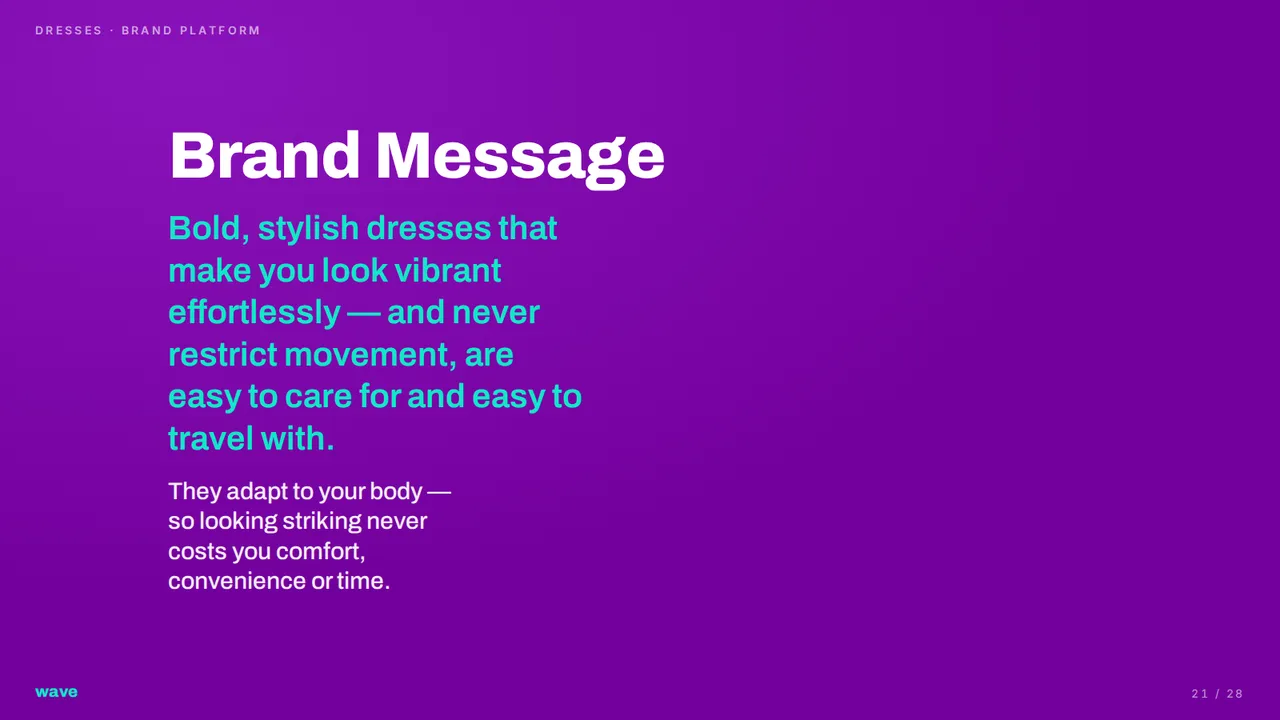
Dresses: bold, stylish dresses you look vibrant in without trying, that never restrict movement and are easy to pack. Reasons to believe: high-tech fabrics, adaptive and oversized cuts, a storage bag with every dress, fit tested on non-standard figures.
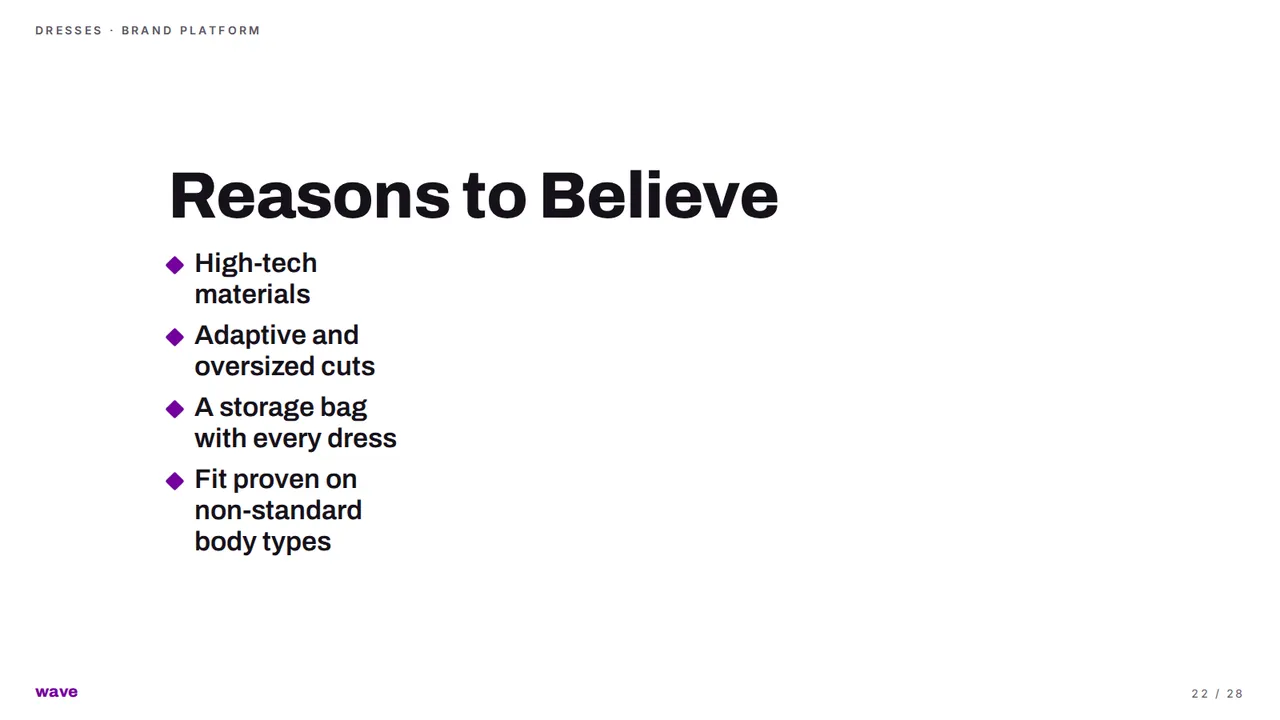
2 slides · swipe →
- 06
Personality, role model, values
How the brand behaves: its personality, role model and values. Tone of voice and visual identity are built on this later.
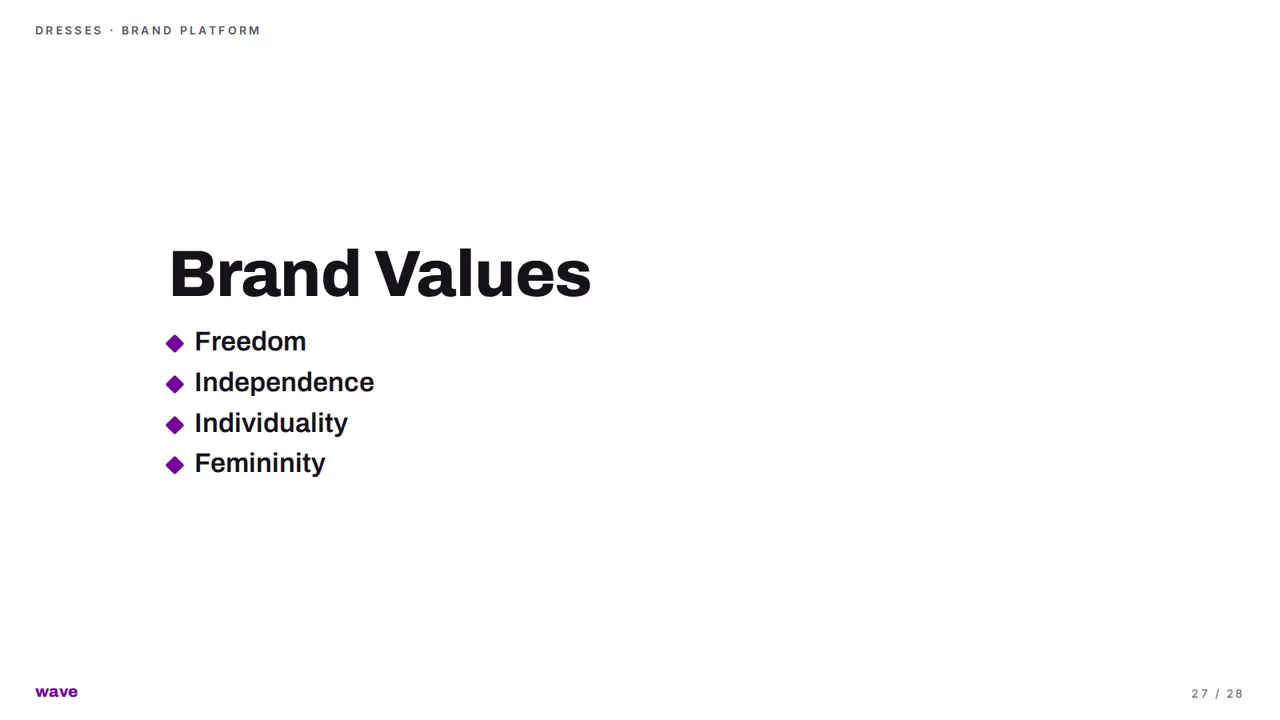
Dresses: bold, creative, independent, joyful. Values: freedom, independence, individuality, femininity.
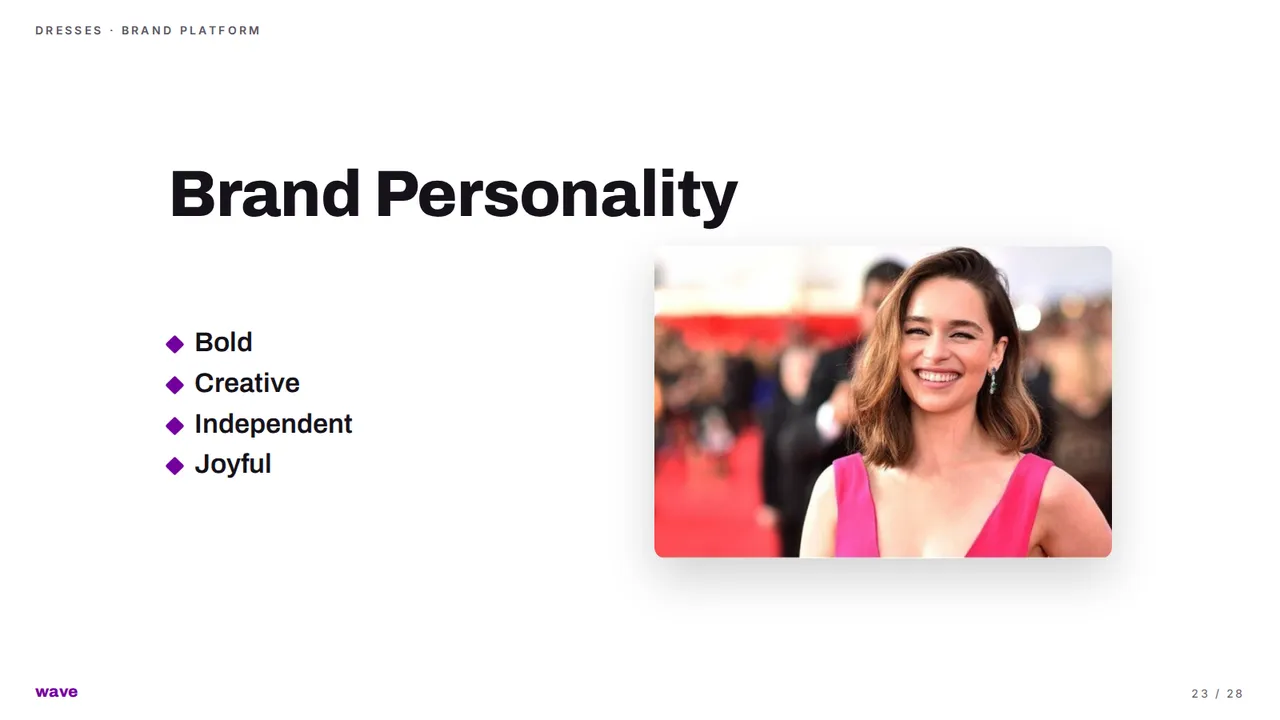
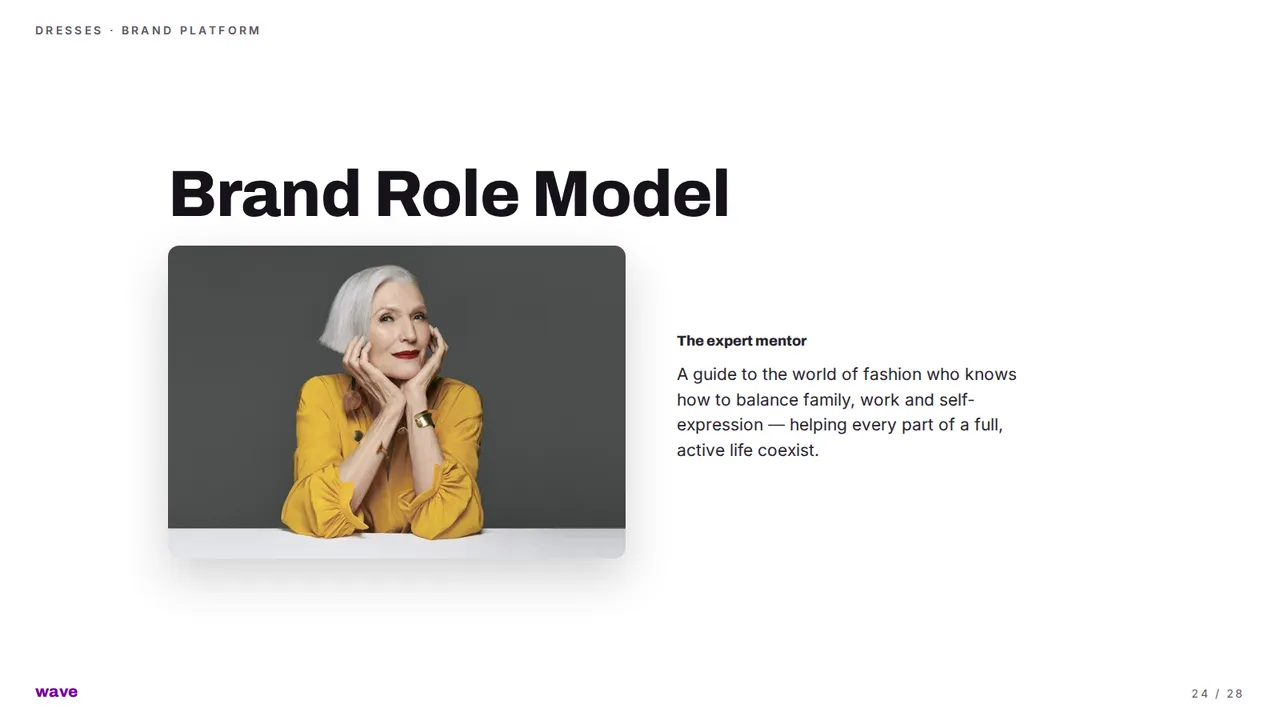
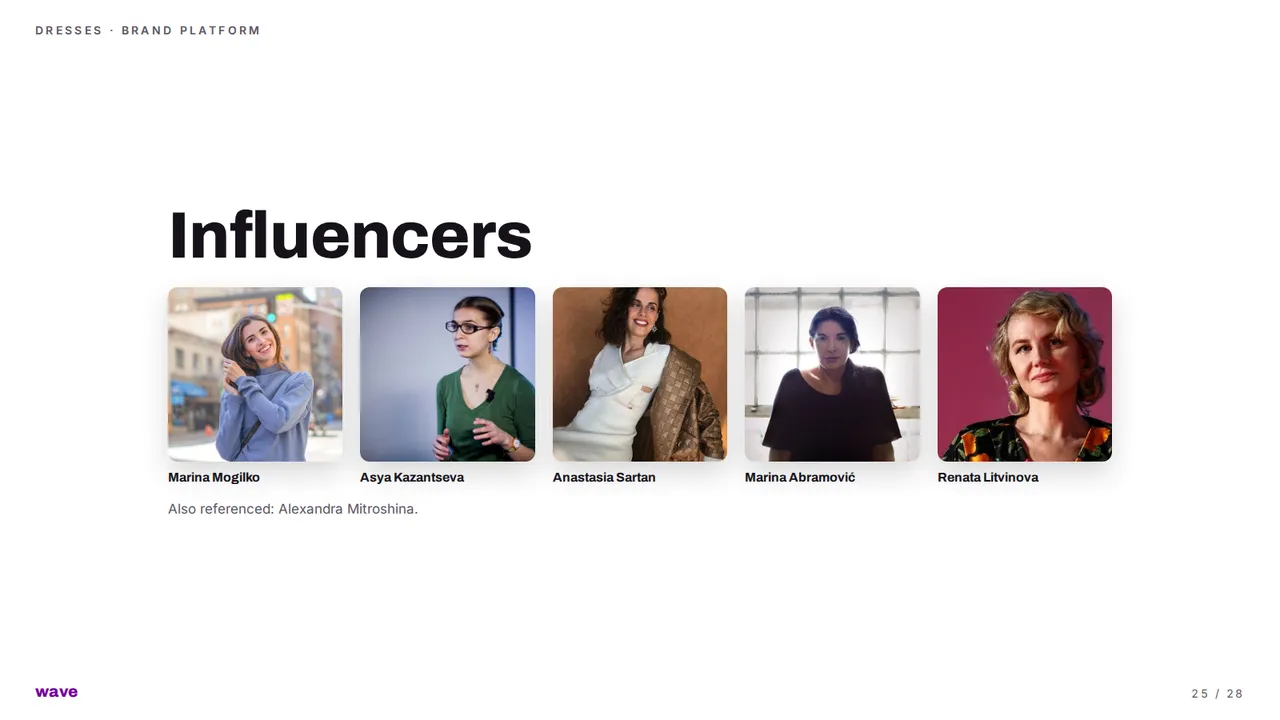
5 slides · swipe →
- 07
Positioning concept
The conclusion of the platform in one sentence: what it is, who it's for, what they want and how the brand gives it to them.
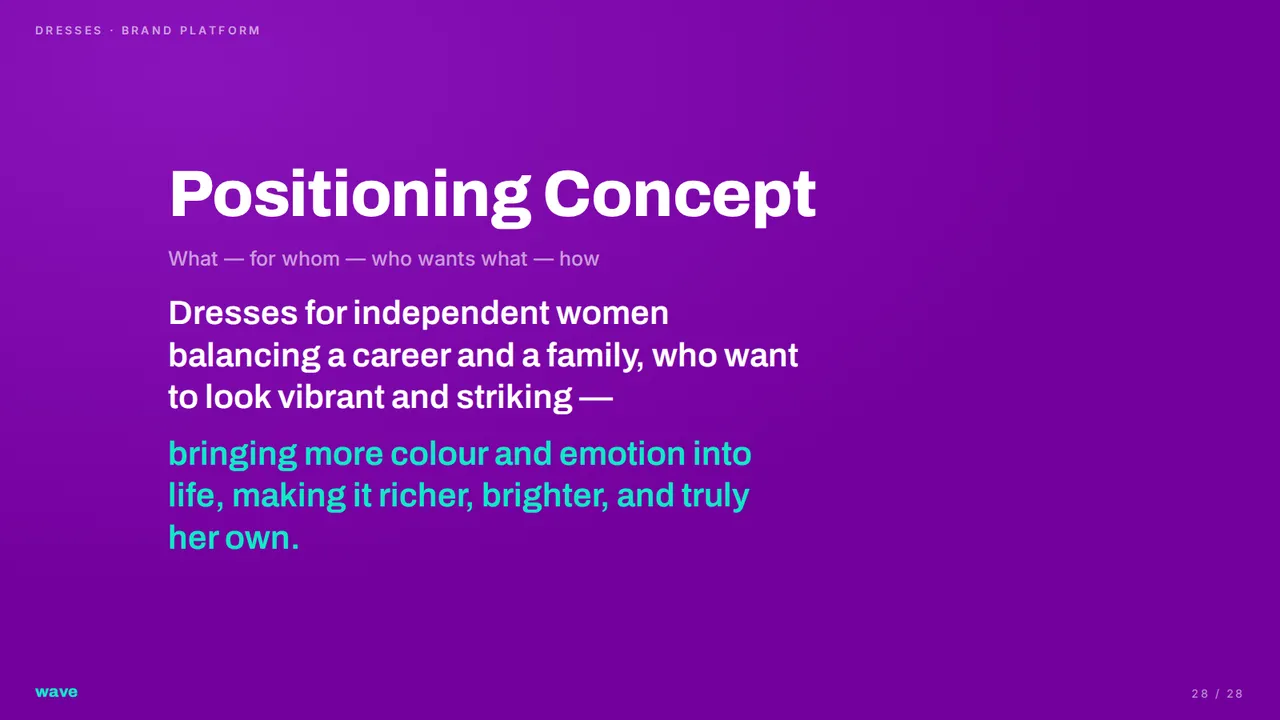
Dresses: dresses for independent women who balance a career and a family and want to look vibrant and striking. They bring more color and emotion into her life, so it feels richer, brighter and, at last, truly her own.
More brand platform examples

How much it costs
A brand platform for a new brand at Wave starts from $1,500. The price depends on the stage of the business: a large established company needs a full brand strategy, and then a dedicated strategist joins the team. The calculator gives you an estimate in a couple of minutes. Estimate the project
Questions about the brand platform
- What is a brand platform in simple terms?
- A document that records who the brand is for, what it promises, why people believe it and how it is positioned in the market. It also sets out the brand's personality, its values and the role model for its relationship with the customer. The identity, website, packaging and copy all rest on it.
- How long does it take to develop a brand platform?
- From two weeks.
- How much does a brand platform cost?
- From $1,500 for a new brand. The price depends on the stage of the business: a large company needs a full brand strategy, and a dedicated strategist joins the team.
- Is a brand platform the same as a brand book?
- No. When people say “brand book”, they most often mean the visual guideline: the rules for the logo, colors, typefaces and graphics. A full brand book is the brand platform or brand strategy together with the visual guideline.
- Does a brand that is already operating need a platform?
- Yes, if it doesn't have one in writing. It is needed when a brand changes its positioning or goes through a rebrand, and even when it simply wants to scale without changing anything. Small and medium businesses usually don't have a platform. If one exists but is outdated or wasn't written by professionals, we write a new one.
- Can you design an identity without a platform?
- Without a strategy, we design identity only for investment funds and events.
- What comes after the brand platform?
- The visual concept and identity, then the brand's media: signage, websites, newsletters and banners, down to postcards, merch and vehicle graphics. Inside the project we build AI tools for the client's team, and the rules go into a brand book. How we work
Second example: Wave's own platform
The platform we wrote for Wave itself: audience, place among design studios, message, values and character. Yes, we had to do our own too.


What the Wave brand platform slides show
The second example is the platform Wave built for its own studio: capabilities, target audience (founders of creative projects, founders of startups and small businesses, marketing leaders in corporations), audience insight, a positioning map of contemporary design studios, competitor communications, brand message, reasons to believe, values (courage, creativity, development), character (fresh, bold, confident, sexy), role model and positioning as a studio of strategic branding and experimental design.