Brand platform · Example
Northern Design: brand platform for an urban-studies education program
In 2018 a major Russian industry-forming enterprise, working through a partner agency, commissioned a brand platform for a social program to develop the cities where it operates. There are several such cities across the country, most of them in the north, which is where the program's name, Northern Design (Severny Dizain), comes from; the client chose the name. The program was conceptual: the client was testing whether the format could work and decided not to launch it at that time. We also designed the program's identity, shown in the NordDesign case.
We ran the analysis together with the client and the agency. Natalya Greben had deep personal experience in this field: she trained as an architectural environment designer and was once the kind of young specialist the program was built for.
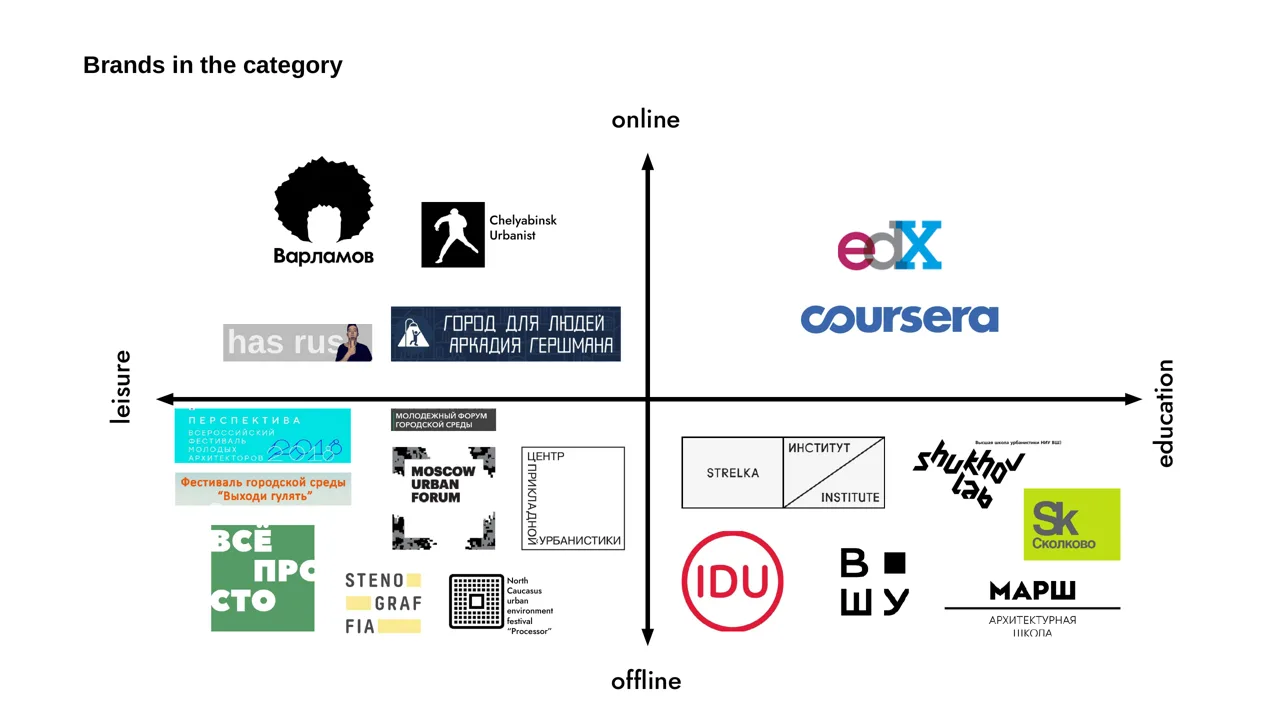
Strategy: category entry
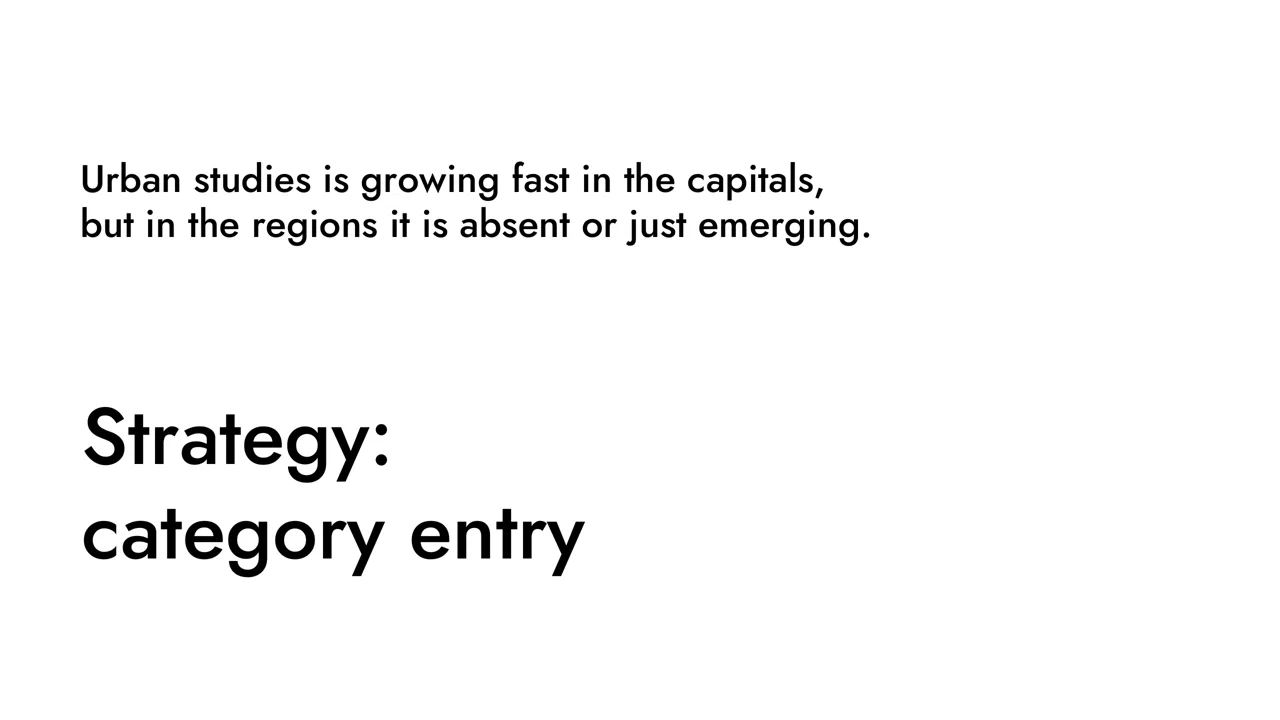
When a market is crowded, a brand has to stand out sharply from its competitors. When a market is nearly empty, the opposite strategy works: borrow the cues people already recognize the category by, so the new brand reads as part of it straight away. Urban studies was growing fast in the capitals but barely existed in the regions, so the first job was to spark interest in the subject itself. In that situation every brand in the category gains when more brands appear: they compete less than they draw attention to the category together, and they cooperate. Northern Design was positioned in online education, where there were only EdX and Coursera with separate architecture courses and no resource devoted to urban studies.
What's inside the platform
- 01
Brands in the category
Urban environment festivals and projects in the regions, mapped by online and offline education and leisure. The strategy that follows from the map: category entry.
2 slides · swipe →
- 02
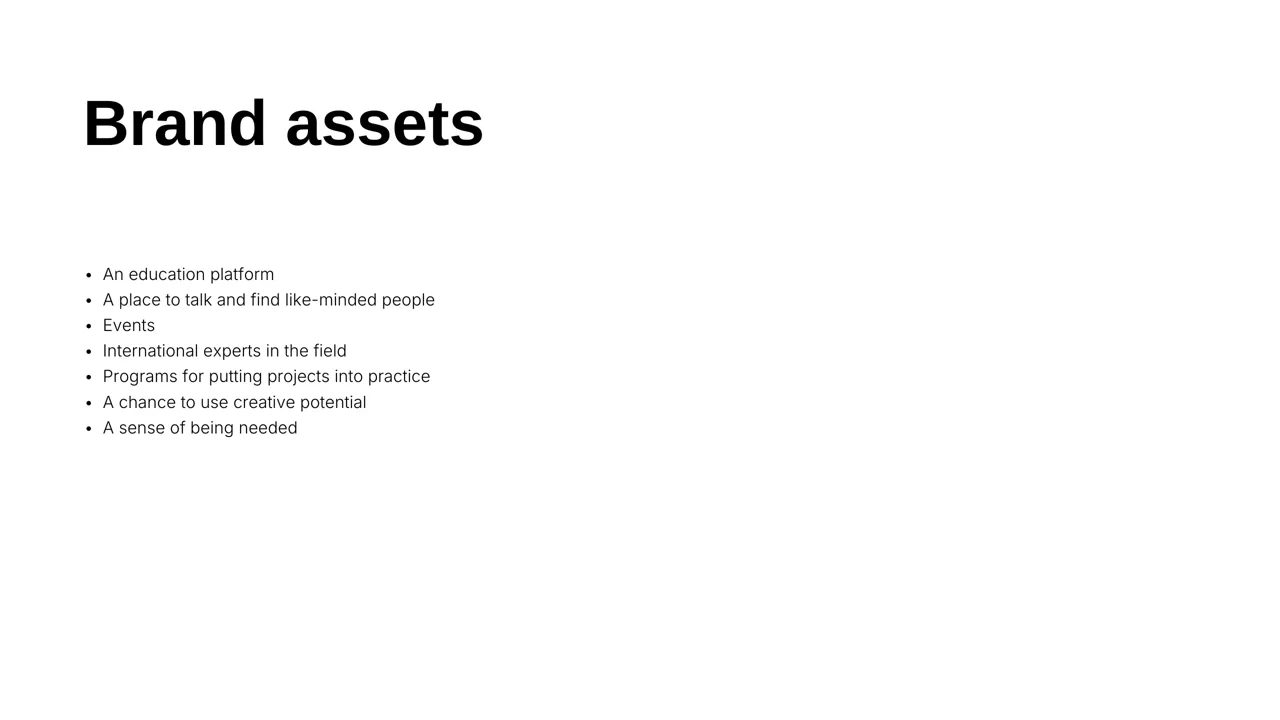
Brand assets
An education platform, a place to talk and find like-minded people, events, international experts, programs for putting projects into practice, a chance to use creative potential, and a sense of being needed.
- 03
Target audience
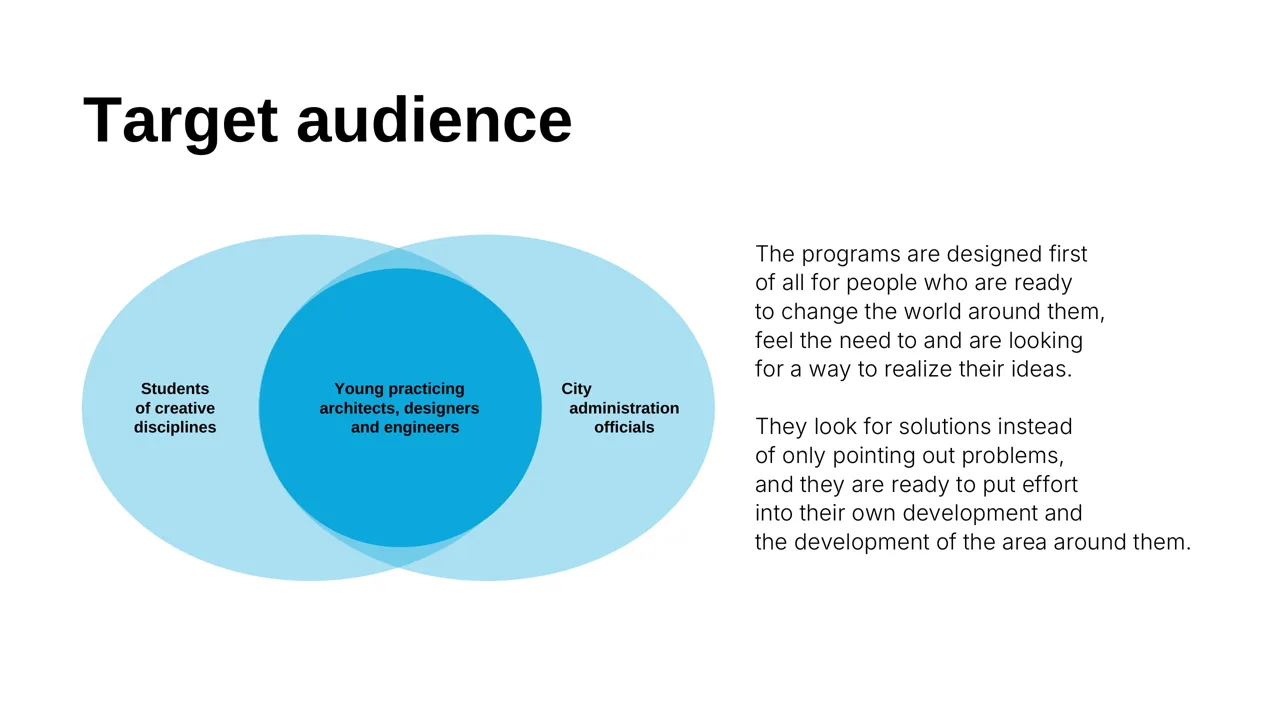
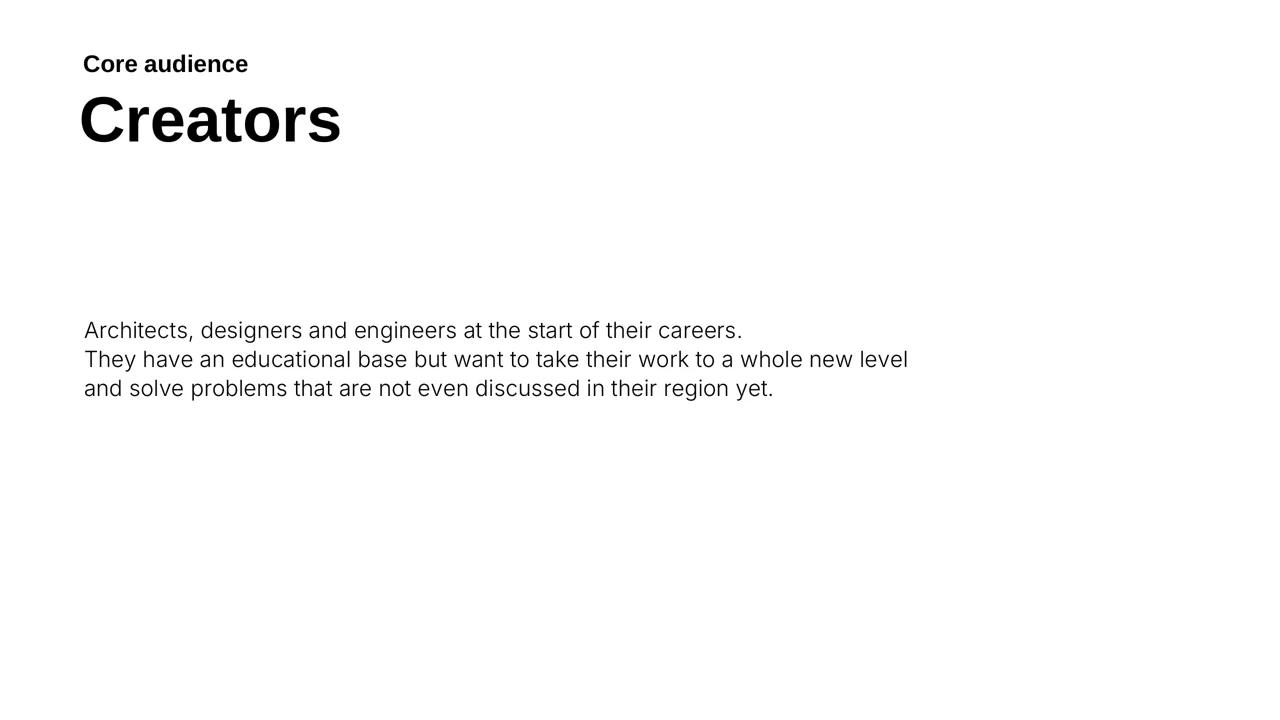
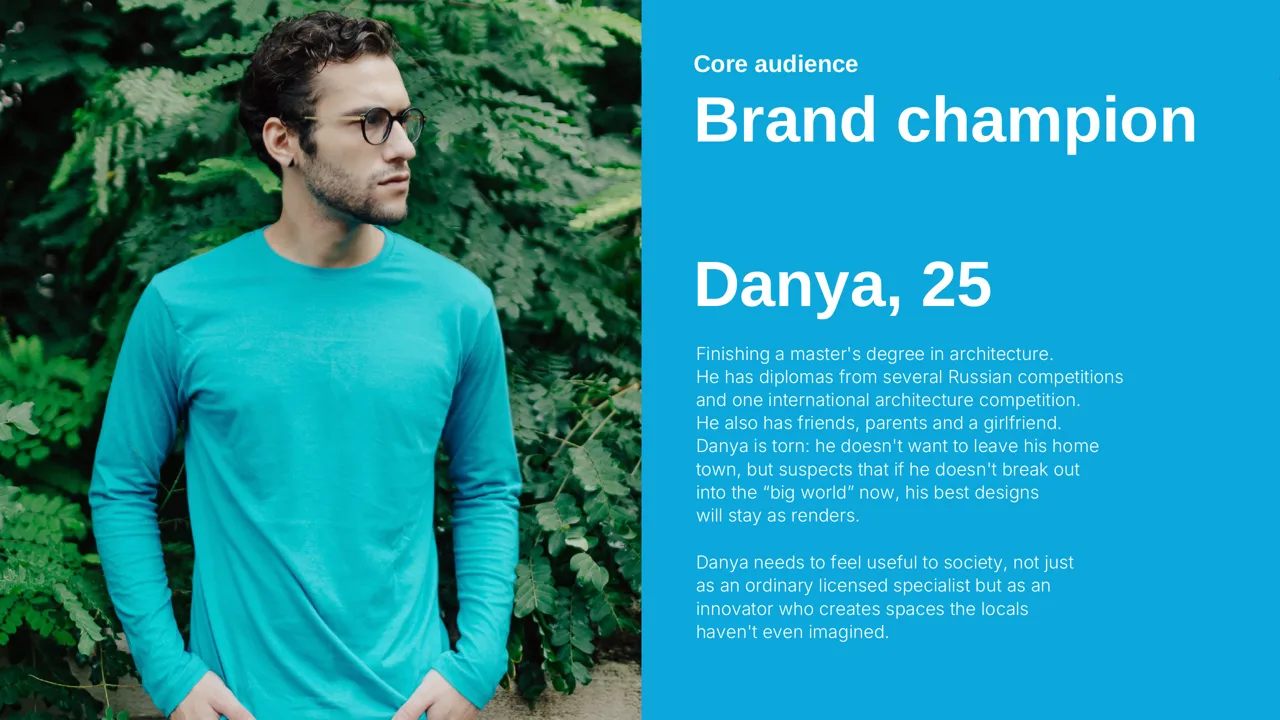
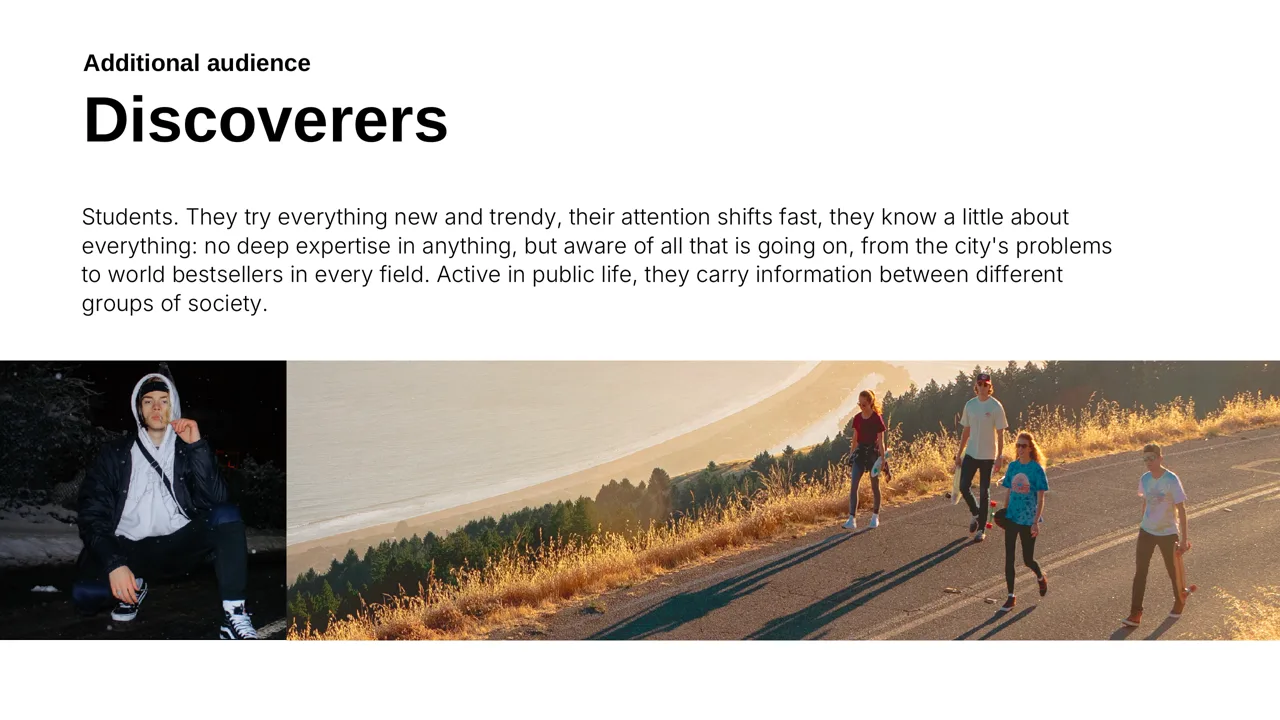
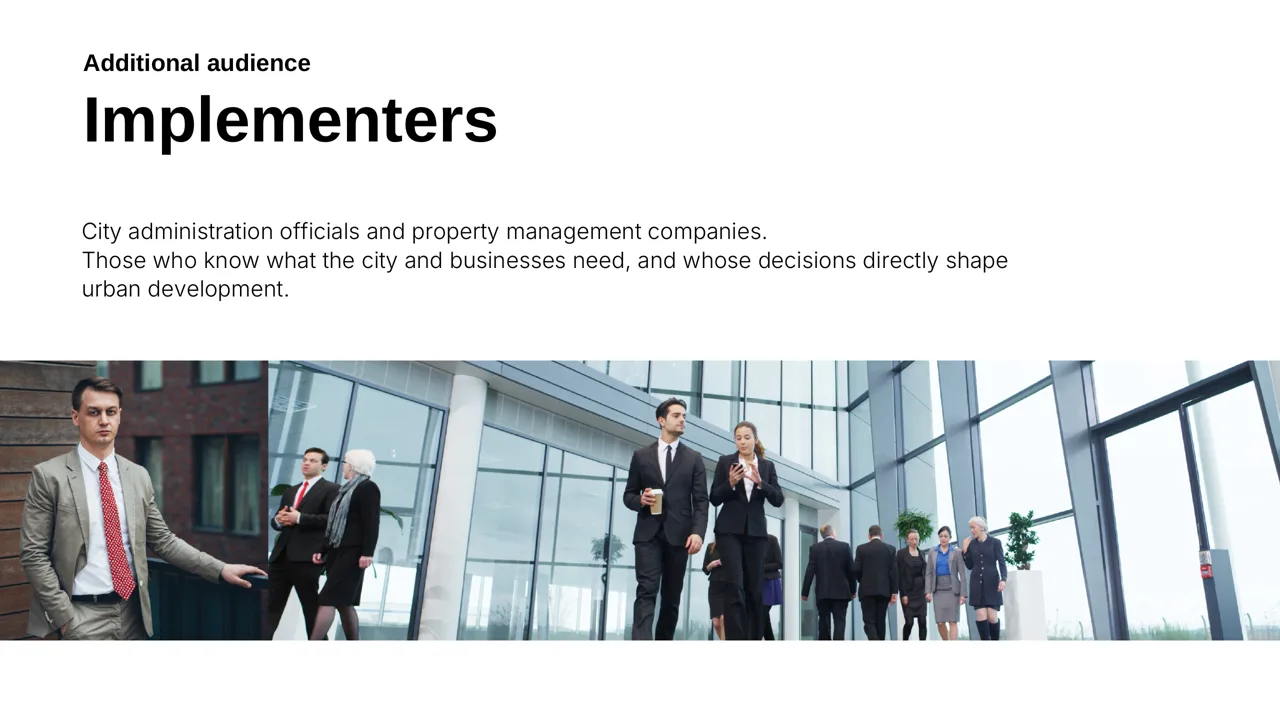
The core is the “creators”: young architects, designers and engineers who want to solve problems nobody in their region is discussing yet. The persona is Danya, 25. He is finishing a master's in architecture and has won several competitions; he doesn't want to leave his home town but fears his projects will stay as renders. Additional audiences: “discoverers”, students who follow everything new, and “implementers” from city administrations and management companies.
6 slides · swipe →
- 04
Audience insight
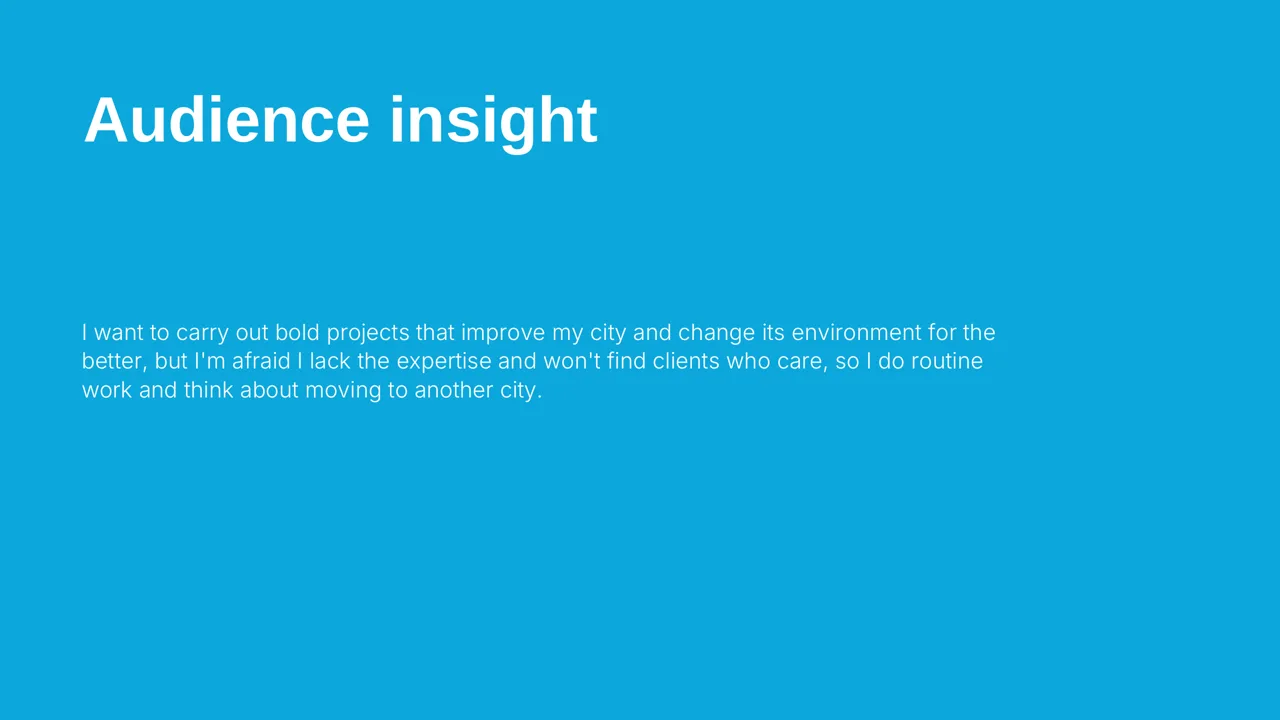
“I want to carry out bold projects that change my city's environment, but I'm afraid I lack the expertise and won't find clients who care, so I do routine work and think about moving away.”
- 05
Brand message and reasons to believe
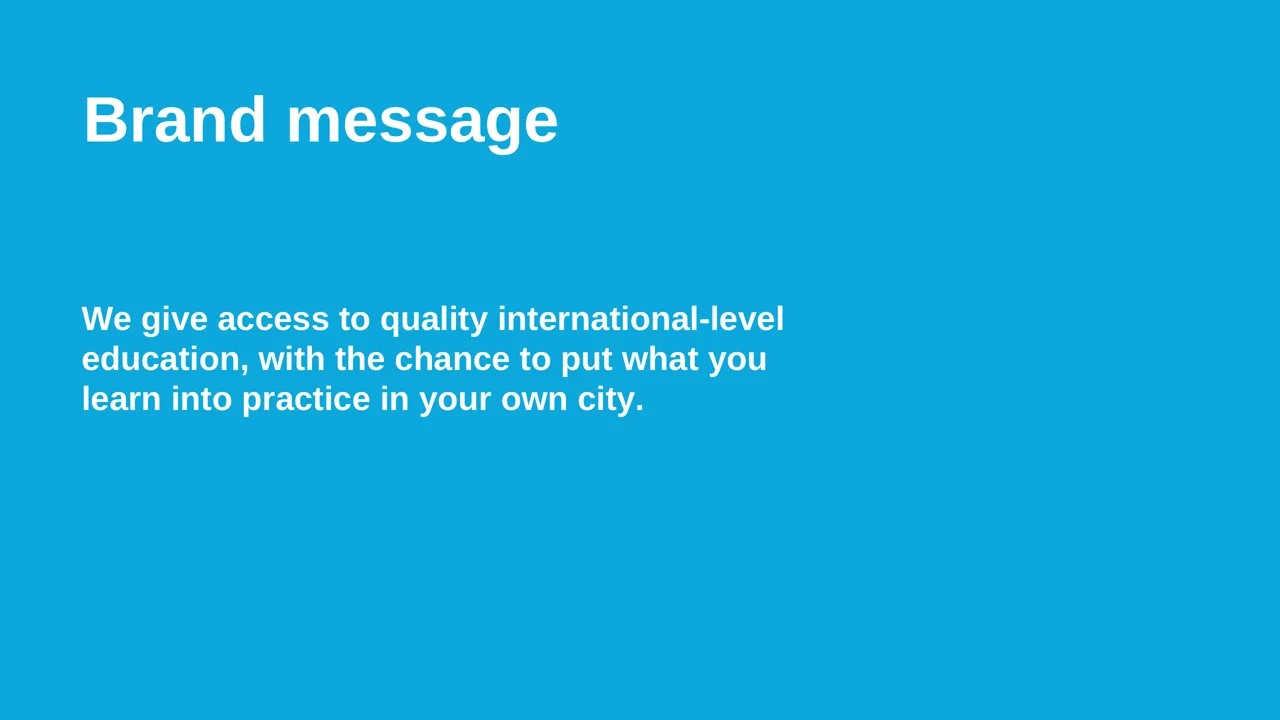
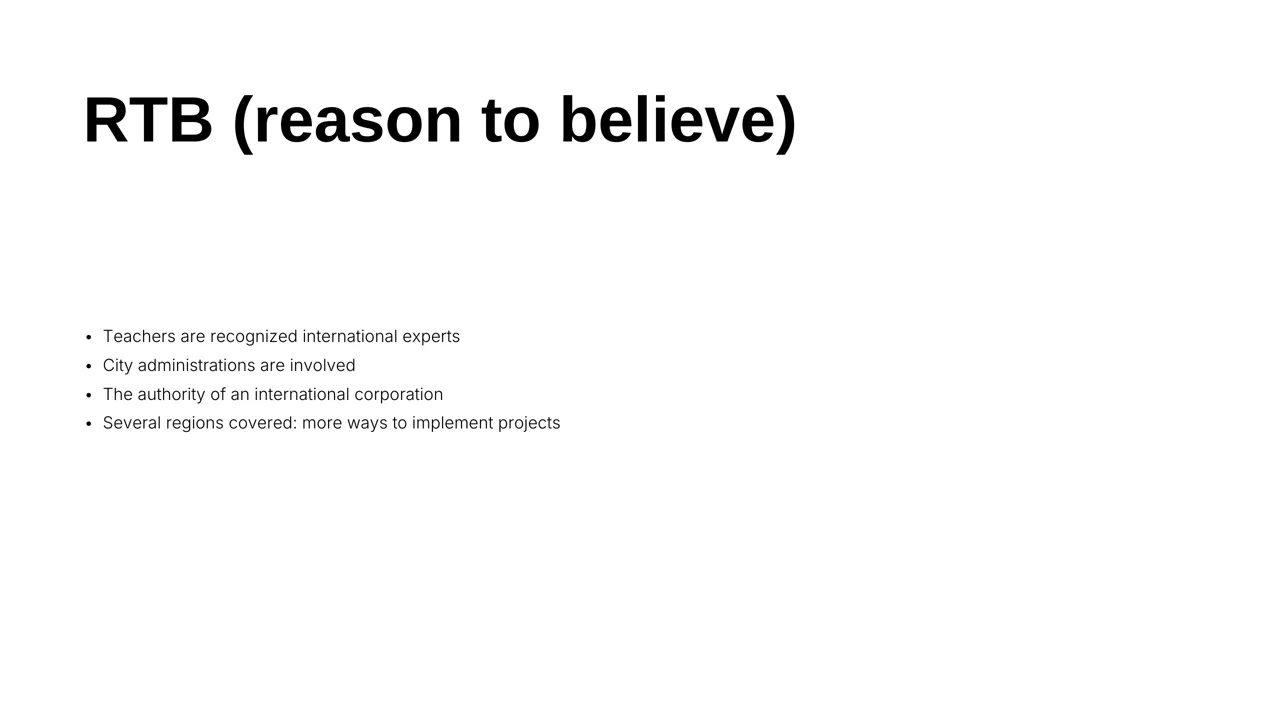
Access to international-level education, with the chance to put it into practice in your own city. Reasons to believe: teachers who are recognized international experts, the involvement of city administrations, the authority of a large corporation, and coverage of several regions.
2 slides · swipe →
- 06
Personality, role model, values
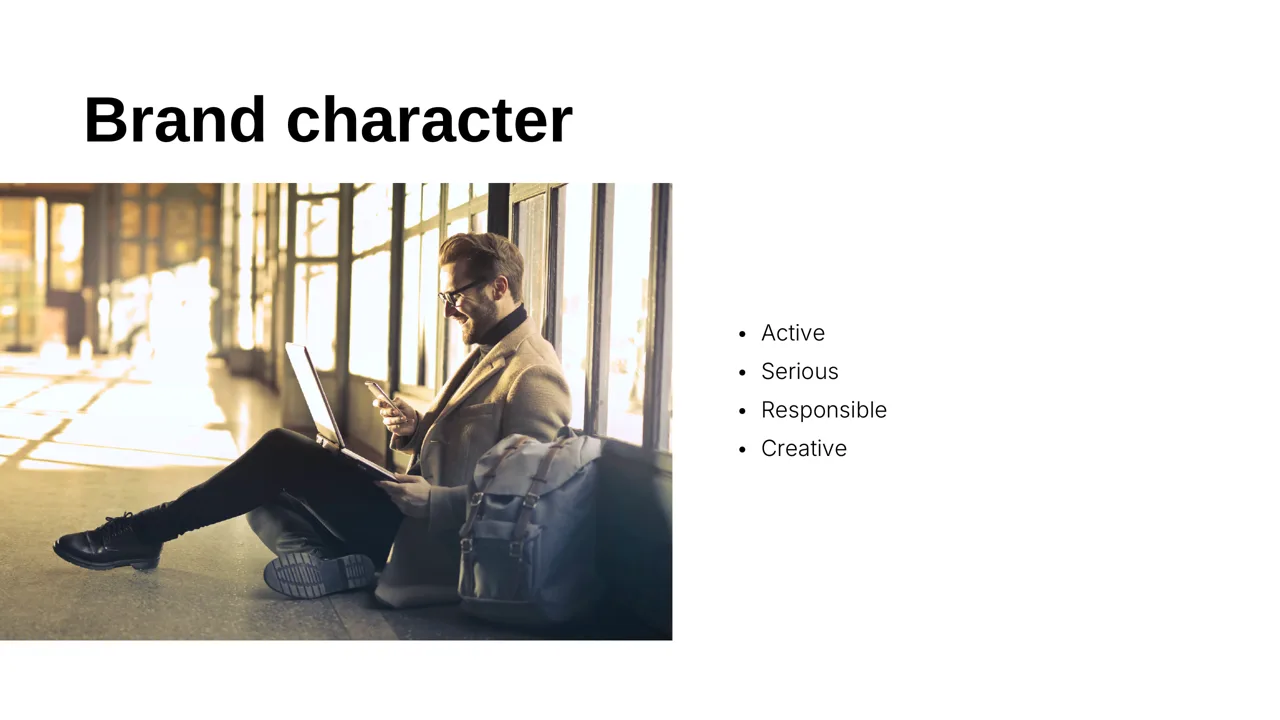
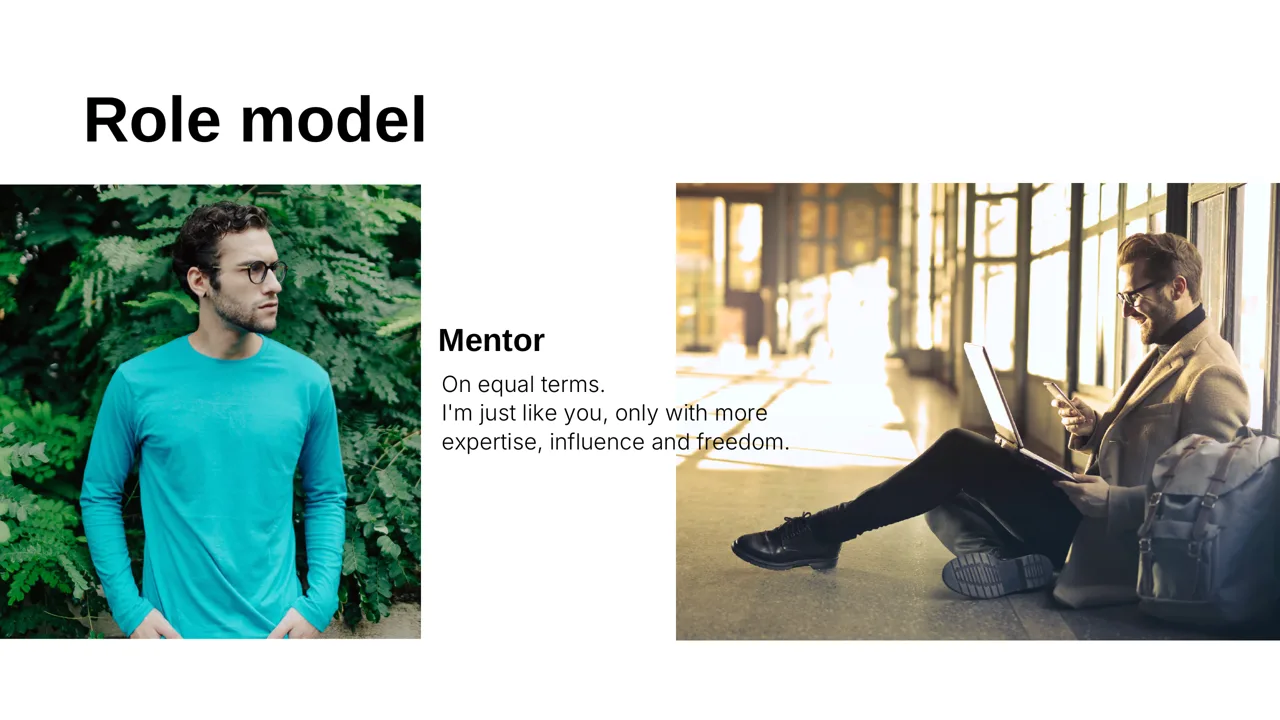
Active, serious, responsible, creative. The role model is a mentor on equal terms: “I'm just like you, only with more expertise, influence and freedom.” Values: growth, courage, responsibility, a systematic approach.
3 slides · swipe →
- 07
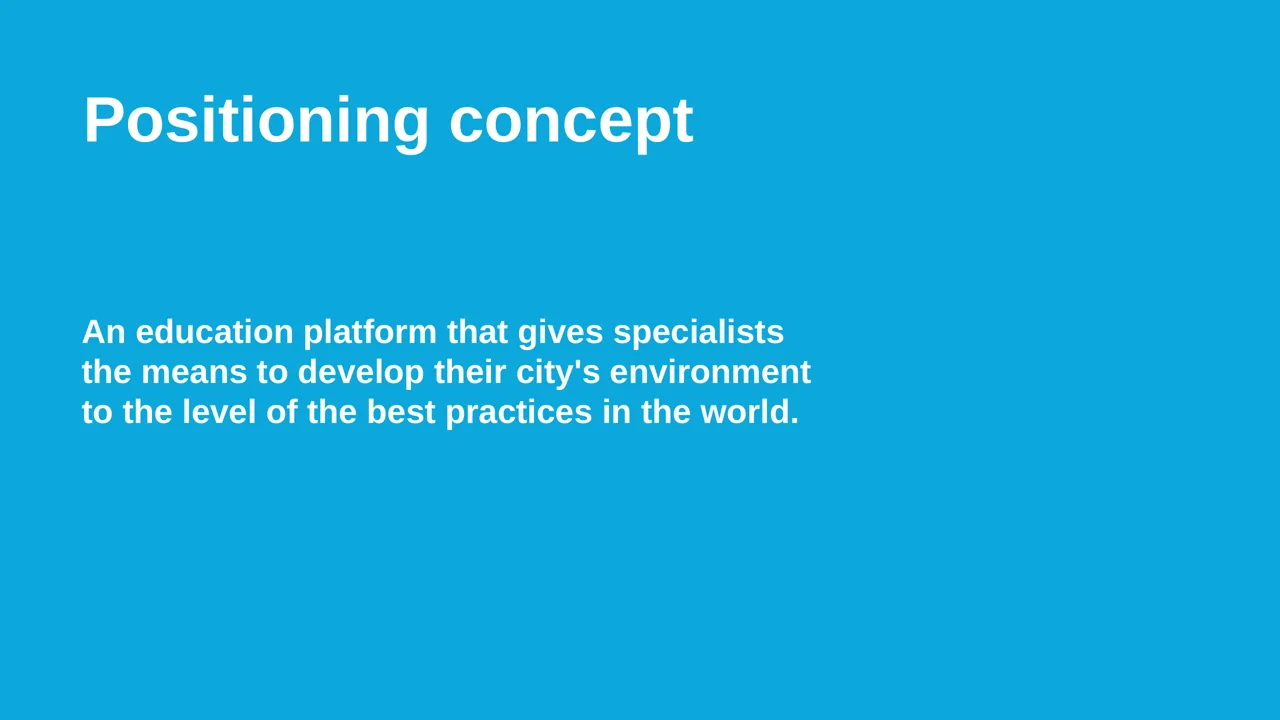
Positioning concept
An education platform that gives specialists the means to develop their city's environment to the level of the best practices in the world.
What a brand platform is and what it contains, with a second example: Brand platform