Identity for festivals and events
An event identity is the visual system of a festival or event: the logo, palette and type, the sponsor presentation, posts and videos, signage, merch and sometimes the stage. Unlike a company brand, a first-time event is usually designed without a brand strategy. That changes how the work is planned, who should do it and when it has to start. Here is how we approach it at Wave, with examples from our festival projects.
By Natalya Greben, founder of Wave
Why a first event rarely needs a brand strategy
A festival can become an annual tradition, or it may never run a second time. Before the first edition nobody knows which. For a small local event that may not repeat, a full brand strategy rarely pays off. Festival crowds are also mixed: a strategy would have to describe too many audience portraits at once.
Strategy becomes worth it later, when the event has run several times, the idea has proven itself and the organizers want to grow. Most festivals happen once a year, so that moment usually comes a few years in. Until then, event identities are made without a strategy, and the work has to be organized differently.
A first event starts with the sponsor deck
Money comes first. If an event has run before, the organizers can show photos and videos from past editions and say: we have done this, we will do it again. A first event has nothing to show, so the look of the presentation carries the argument. It has to prove that the organizers take the event seriously.
At this stage there is usually no full identity yet. If there is already a budget for one, typically a few thousand dollars, good. If the organizers are still looking for a sponsor, they need a well-designed pitch deck with a clear message, perhaps a mark and a palette that conveys the mood of the event, even if not everything is decided yet.
Bali Skim Gathering, the first international skimboarding festival in Indonesia, started this way. We made a web presentation for sponsors that opens on a phone, and with it the organizers brought in Singaraja beer as the main partner.

One team for the deck and the identity
Finding sponsors takes time. If the same designers make the pitch deck and later the identity, they spend those weeks or months inside the event: the thought that they will design its identity is already in the back of their minds while they work on the deck. By the time the money is found, they know the people, the place and the mood. This partly makes up for the missing strategy.
At Bali Skim Gathering the identity grew out of the work on the deck and the Instagram content, together with the organizers, and by the festival weekend it was already a system.


Where the idea comes from, and why the team matters more
With a company brand, the strategy defines what the identity must say. Any professional designer working from a good strategy will produce an idea that hits the target, even if it is not the boldest one. Without a strategy the result rests on creativity alone, and its direction comes from the designer's background, visual experience and personality, or from the character of the studio.
That is why choosing the team matters more for an event than for a business. The designers do not have to belong to the community, and for a business conference they do not have to be founders. But they should admire the subject or have experience in it. A team for an electronic music festival should know and love electronic music. For an extreme sports event like skimboarding, they should feel the sport.
The date does not move
Brand launches often get postponed, usually by the founders or the marketing team, so a design studio's deadline is rarely the critical one. An event has a fixed date. A good identity takes at least two weeks to develop, better a month. Then signage and banners have to be printed and merch produced, and that needs time too.
So identity work should start several months before the event, not a month before, when everything else is ready and someone remembers the visual style. And the plan should assume that something will go wrong, because something always does.
What stays after the event
After the event the identity keeps working: merch on participants and spectators, tags and posts on social media, videos and films about the festival, trophies. For a year these remind people that the event happened and that they want it again.

Many festivals change their identity every year as a tradition, but something carries over so the event stays recognizable: the logo, or the style of the stage design. Tomorrowland builds a new main stage every year, with new objects and colors, but it is always a fantasy world, and you can tell it is Tomorrowland in footage from any year.
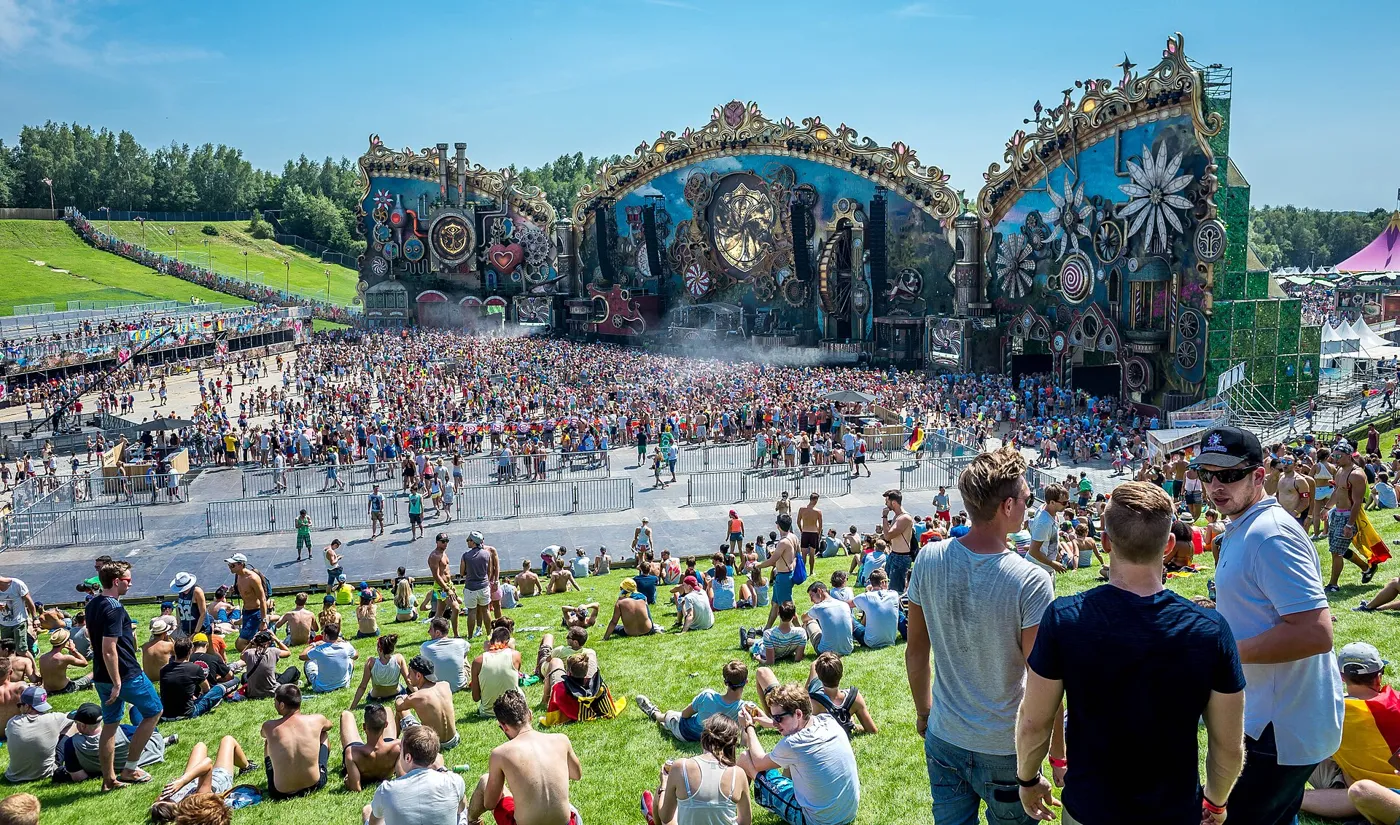 2014
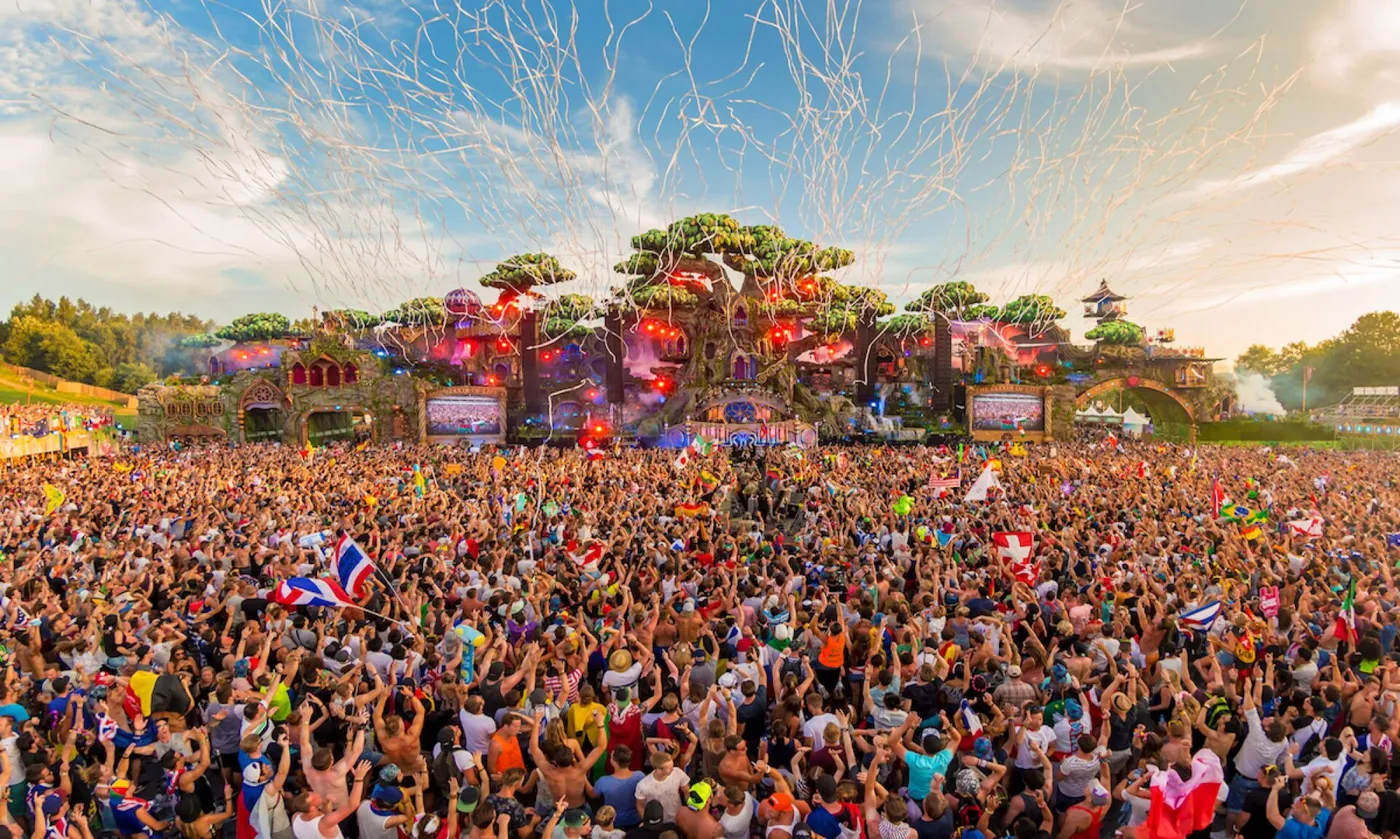 2016
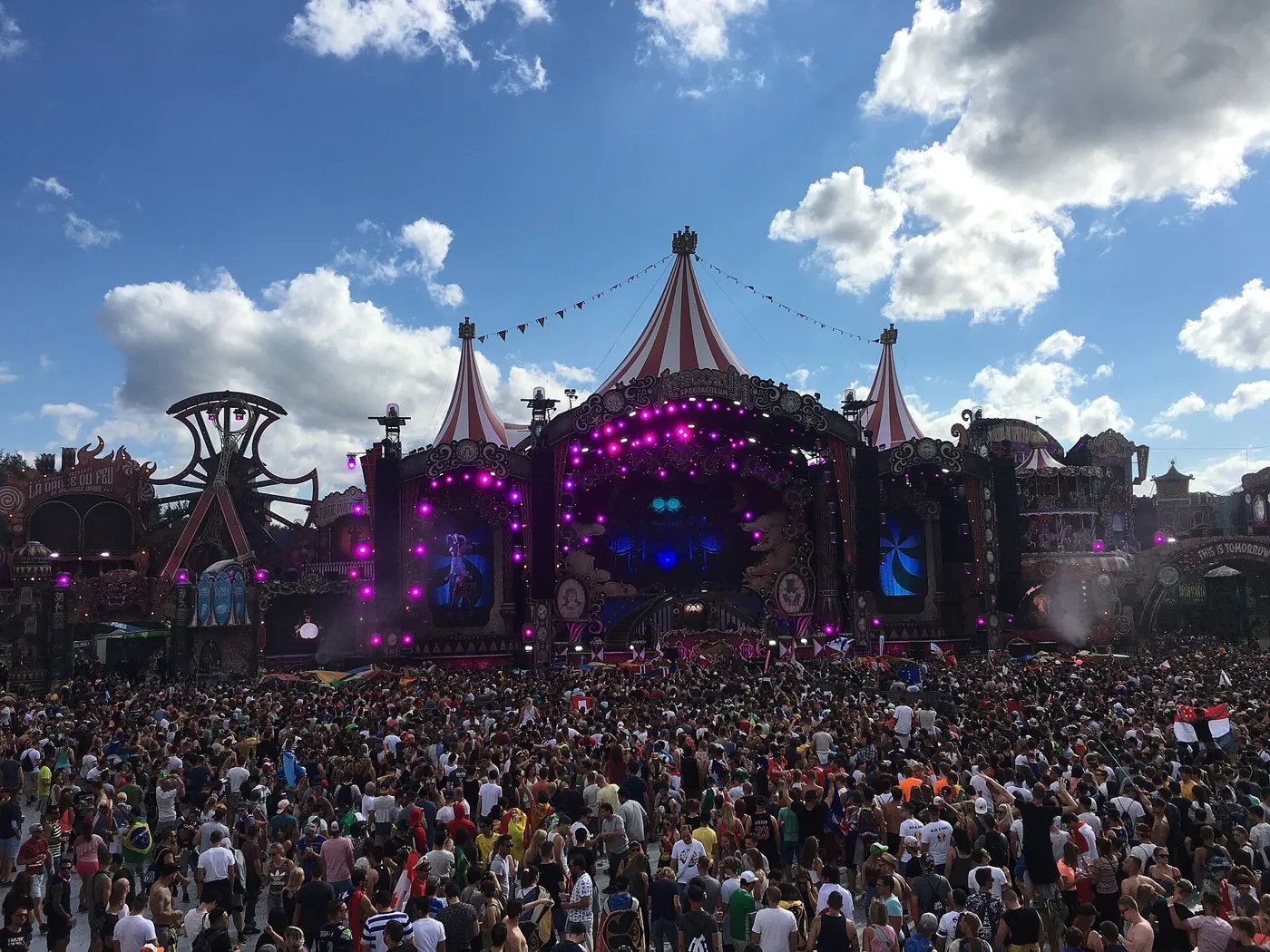 2017
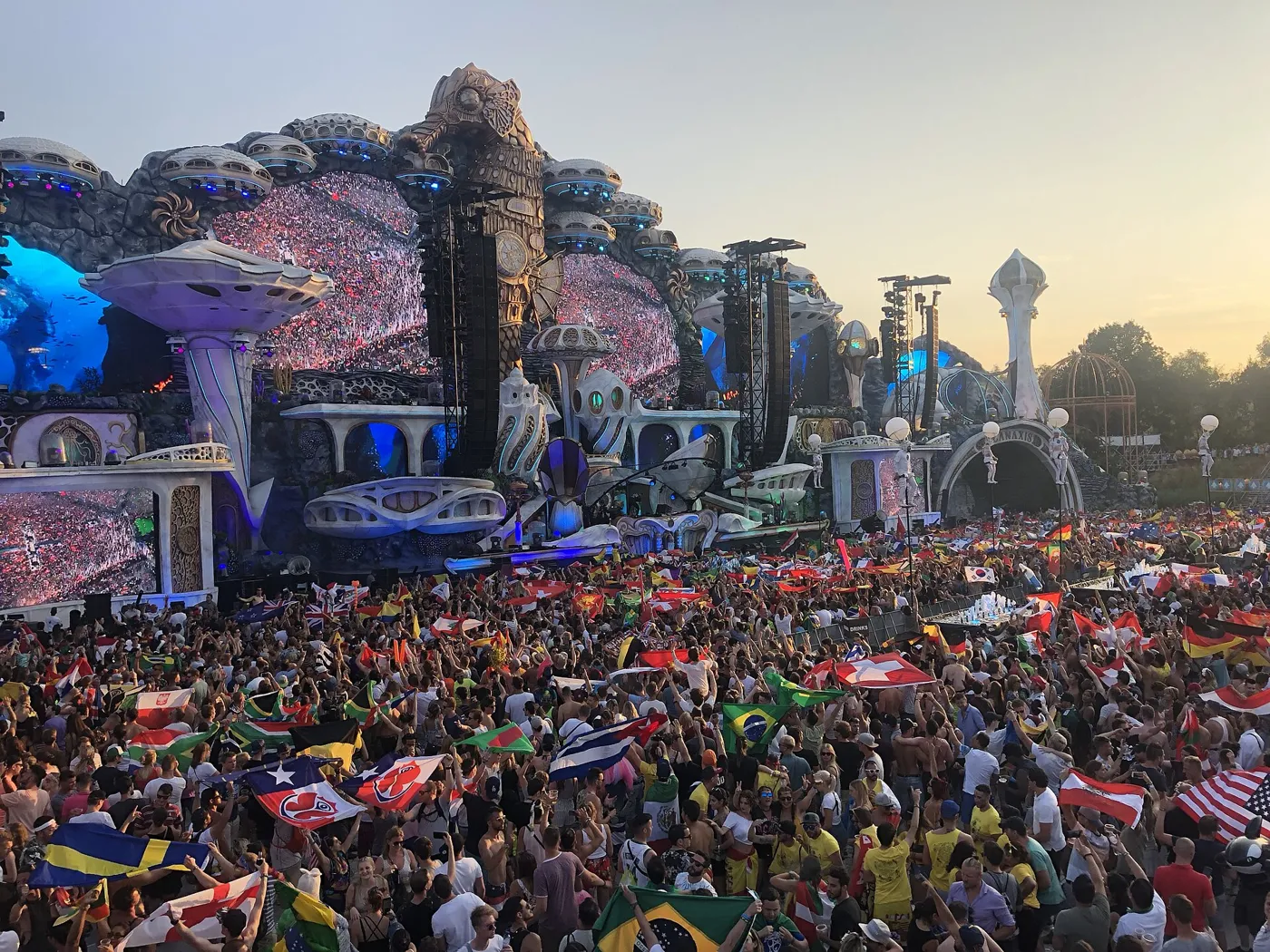 2018
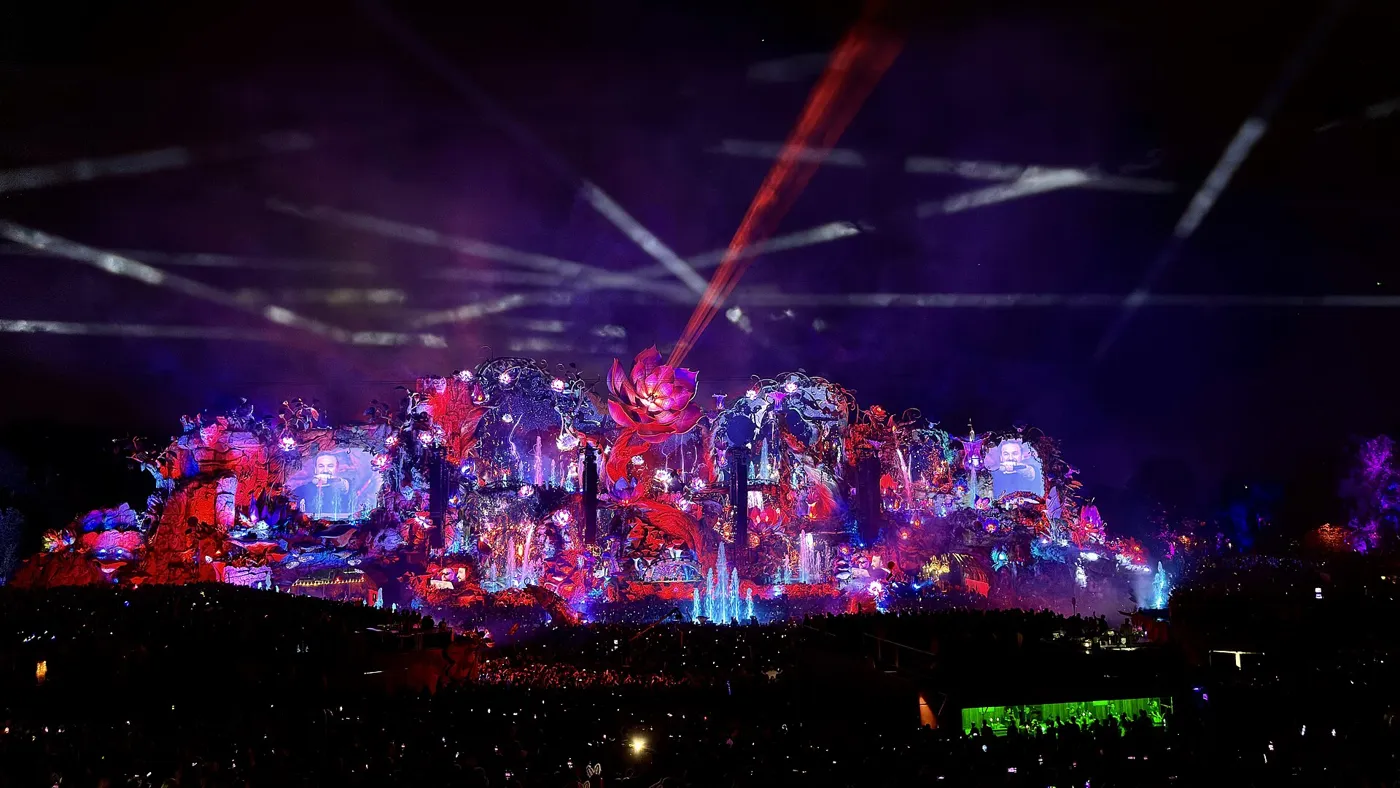 2024
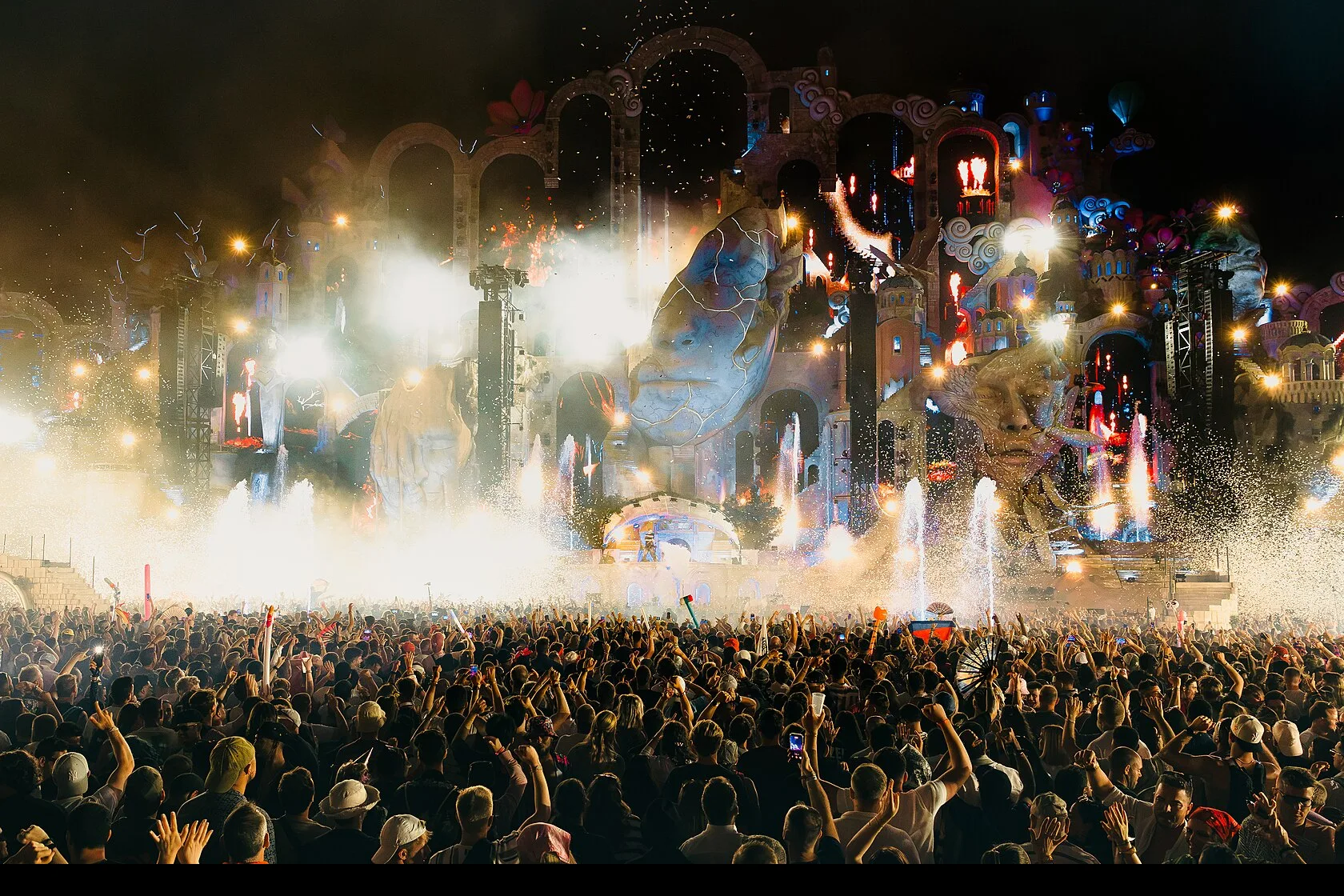 2026
2014: sergejf, CC BY 2.0 · 2016: Me109zito, CC BY-SA 4.0 · 2017: Arroser, CC BY-SA 4.0 · 2018: Arroser, CC BY-SA 4.0 · 2024: Adkoby, CC BY-SA 4.0 · 2026: Ludovic Delot, CC BY 4.0 — Wikimedia Commons, resized
For the Suara music festival we designed a stage concept in Nuanu, a creative city in Bali. The stage was meant to be temporary, and its main job was to promote the place. Nuanu's landscape already has a style, set by Daniel Popper's monumental sculptures. We designed the stage to suit that style rather than imitate the artist, so that it would read as part of the space.
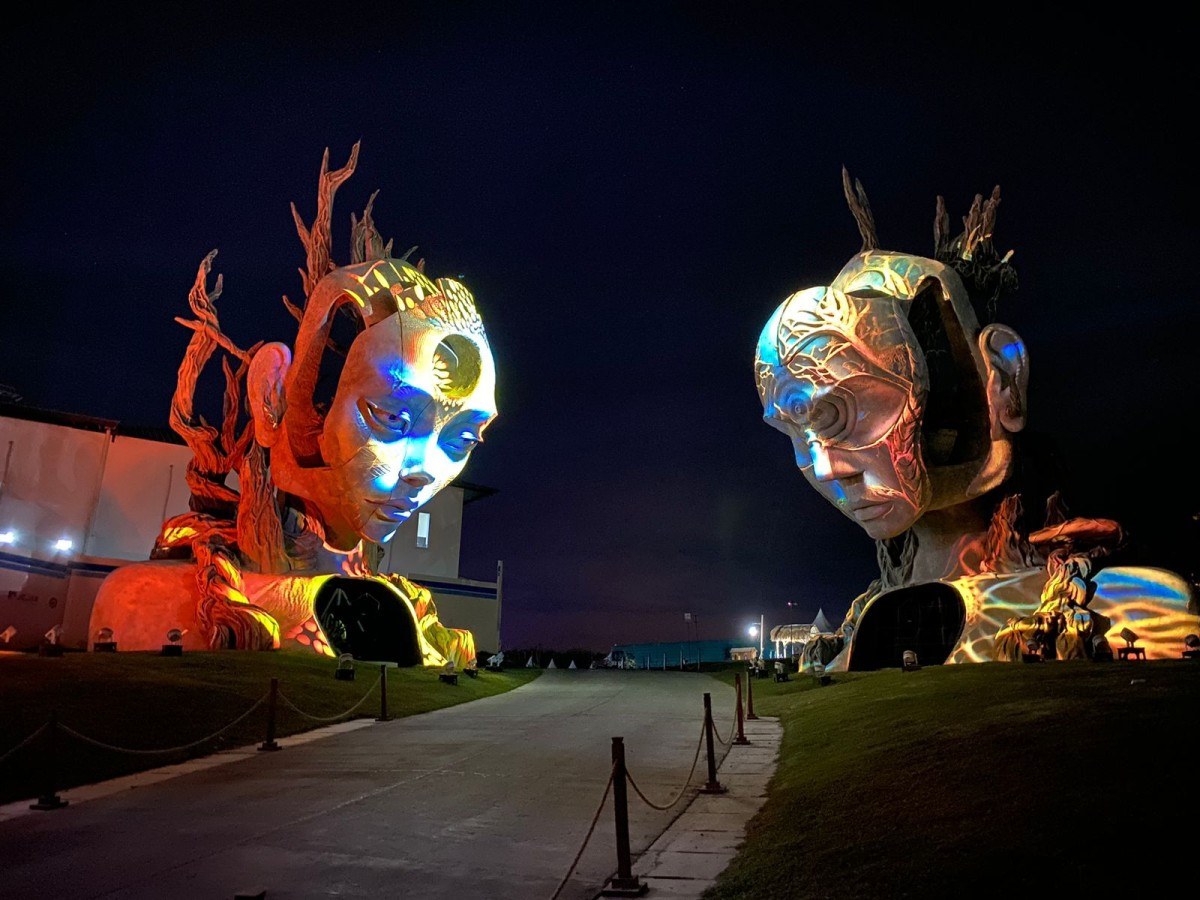
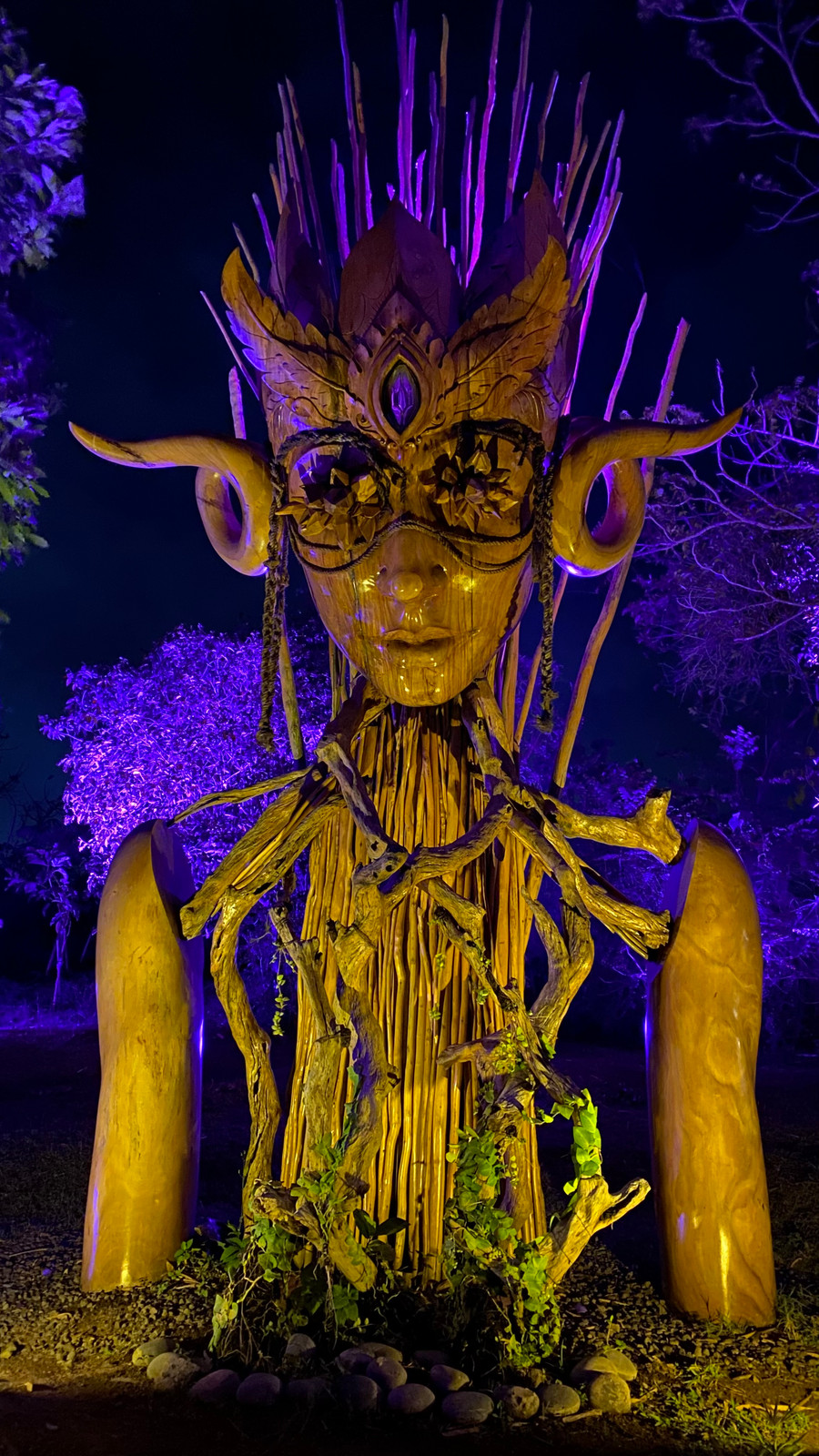
An exception: open calls at festivals for designers
Typomania is an annual festival of typographic design with its own strategy for attracting designers. Part of it is an open call for each edition's identity: the festival's audience are designers, they know the industry and themselves well, and new ideas are the point of the festival. Our concept “Closer / Further” for Typomania 2021 made the shortlist.
This model works only when the audience are designers. A festival for brewers could run a contest for the festival beer, but its identity still needs professionals from outside the community.
What event work is like for a designer
Hard deadlines mean planning the timeline carefully and building in risk: professional time management. At the same time, without a strategy and with festivals that are close to us, this is more creative and more fun than most projects. That pleasure and freedom are what give the energy to keep the timeline.
Our event projects
- Bali Skim Gathering
first international skimboarding festival in Indonesia: logo, sponsor presentation, Instagram content, promo videos
- Suara — Te Fiti Stage
stage concept for a music festival in Nuanu, Bali
- Typomania 2021
open-call identity concept for a typography festival, shortlisted
- MARS — Remember
identity for an exhibition at a digital art gallery
- Parade of Brass Bands
concept identity for a city music event
Planning a festival or an event? Write to us, or check the timeline and budget in the calculator.